
Best Garage Door Insulation Kits (2026): R-Value Per Dollar Compared
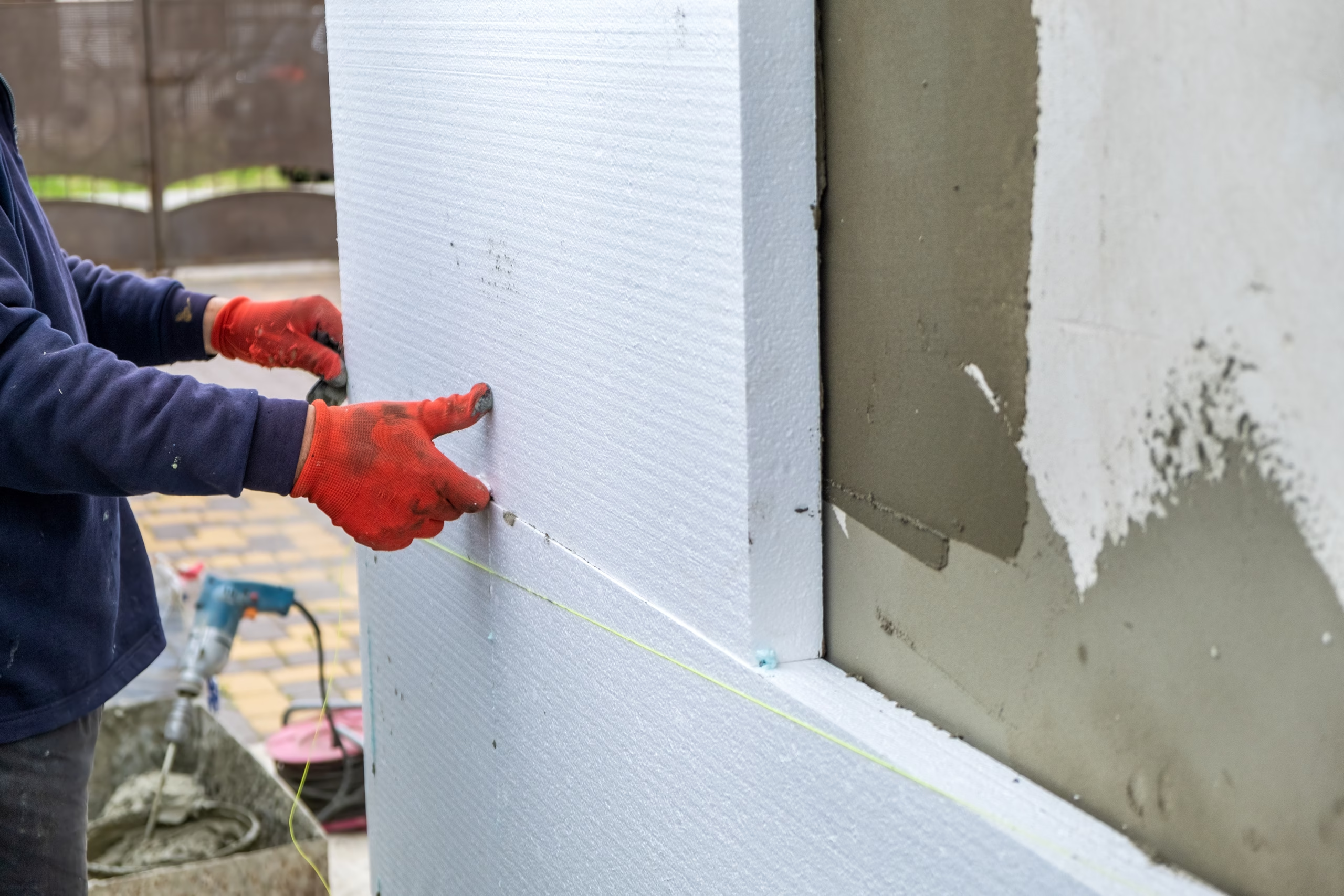
Garage door insulation kits range from about $100 to nearly $400 depending on brand and coverage — but the R-value you actually get per dollar varies just as much. Here’s how the three most common kits stack up.
The Brofessionals is reader-supported. When you buy through links on this page we may earn a small commission at no extra cost to you. As an Amazon Associate we earn from qualifying purchases. See our full disclosure.
An uninsulated steel garage door is one of the biggest thermal leaks in an attached garage — it swings closer to the outdoor temperature than any wall in the house, which matters if you park a car in there, use the garage as a workshop, or share a wall with a living space above or beside it. A insulation kit won’t turn your garage into a conditioned room, but it meaningfully cuts the temperature swing and knocks down road noise.
The three kits homeowners actually buy — NASA Tech’s reflective foam core kit, Owens Corning’s fiberglass panel kit, and Matador’s rigid foam kit — take three different approaches to hitting a similar R-8-ish target, at three different price points. We’re framing this comparison around R-value per dollar, because the sticker price alone is misleading: a cheaper kit that covers less door, or delivers less R-value, isn’t actually the better deal.
Quick Comparison
| Kit | R-Value | Typical Coverage | Price | Rough R-Value per $ |
|---|---|---|---|---|
| NASA Tech Reflective Foam Core | R-8 | 2-car door up to 16×8 ft or 18×8 ft | ~$100–$140 | Best (~0.07–0.08) |
| Owens Corning GD01 Fiberglass (8-panel) | R-8 | 1-car door up to 9×7’8″ | ~$159–$184 | Mid (~0.045–0.05) |
| Matador Rigid Foam Kit | R-4.8 | 1-car door up to 9 ft wide × 7–8 ft tall (2 kits for a double door) | ~$150–$190 per kit | Lowest (~0.03) |
NASA Tech Reflective Foam Core Kit — Best R-Value per Dollar
NASA Tech’s kit (sold by US Energy Products) is a reflective, foil-faced foam core insulation that’s roughly 5/16 inch thick — the thickest reflective foam-core product widely sold for this use — and it carries an R-8 rating. It comes as rolled sheets you cut to fit each door panel, along with heavy-duty double-sided tape, a razor, and a squeegee. For a full 2-car door (16 or 18 feet wide by 7 or 8 feet tall), it typically runs around $100–$140, which makes it the clear winner on R-value per dollar in this comparison.
The tradeoff is material: reflective foil-faced foam looks and feels less finished than rigid foam board, and it’s more prone to sagging or peeling at the tape line over several years, especially in a humid garage. If your priority is the lowest cost per R-value point and you don’t mind a utilitarian look, this is the pick.
Pros
- Best R-value per dollar of the three kits, especially for a full 2-car door
- R-8 rating matches the pricier Owens Corning kit at roughly half the cost per panel
- Simple tape-and-trim installation, no special tools
Cons
- Reflective foil facing looks less finished than rigid foam panels
- Tape adhesion can weaken over time in humid or temperature-swinging garages
- Less rigid than foam board, so panels can flex or sag slightly
Check NASA Tech Garage Door Insulation Kit on Amazon →
Owens Corning GD01 Fiberglass Kit — Best for Serious Cold or Sound Dampening
Owens Corning’s kit uses actual fiberglass batts faced with a washable white vinyl covering, and it’s the only kit here that meaningfully cuts noise as well as temperature — the company cites roughly a 20% noise reduction alongside the thermal benefit. Fiberglass is also simply better than foil-faced foam at resisting conductive heat transfer in genuinely cold climates, which is why garages in harsh winter regions tend to skew toward this kit despite the higher price.
An 8-panel kit covers a single door up to 9 feet wide by 7 feet 8 inches tall, and runs about $159–$184 depending on retailer and promotions. For a 2-car door you’re buying two kits, which pushes total cost well past $300–$350 — the worst-value option per square foot of the three, but arguably the best-performing in extreme climates.
Check Owens Corning Garage Door Insulation Kit on Amazon →
Matador Rigid Foam Kit — Best Finished Look, Lowest R-Value per Dollar
Matador’s kit uses rigid, laminated polystyrene panels (1.25 inches thick, 20.25 inches wide, 54 inches long per panel) that friction-fit into each door section without tape, glue, or fasteners. It’s the fastest kit to install and looks the most finished once it’s in, which is why it shows up often in garages that double as living or workout space. The R-value, at 4.8, is meaningfully lower than either NASA Tech or Owens Corning, and at roughly $150–$190 per single-door kit, it’s the weakest R-value-per-dollar performer here — you’re paying a premium for the rigid, tool-free installation and finished appearance rather than for raw thermal performance.
Check Matador Garage Door Insulation Kit on Amazon →
Which One Should You Actually Buy?
One thing all three kits share: none of them insulate the door track, weatherstripping, or the gap under the door, which are often bigger sources of air leakage than the door panel itself. Pair any of these kits with fresh bottom-seal weatherstripping for the biggest real-world temperature improvement. Once the door itself is sorted, our guide to garage wall and overhead storage systems covers organizing everything else in the space.