Ryobi vs DeWalt Impact Driver: Which One Should You Buy?
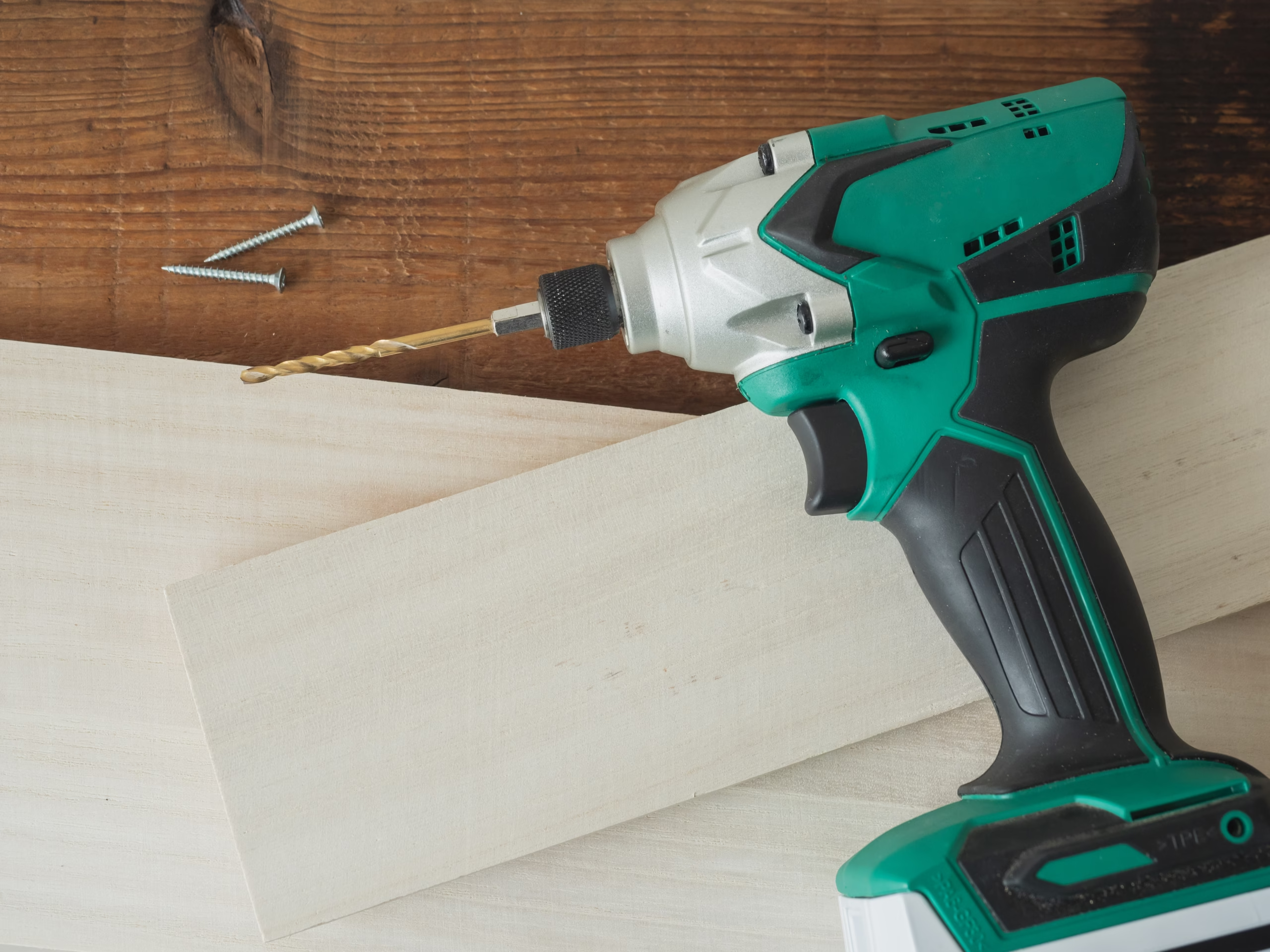
Ryobi’s 18V ONE+ HP and DeWalt’s 20V MAX ATOMIC impact drivers both nail the basics — here’s how they stack up on torque, speed, price, and which battery ecosystem makes sense for your garage.
The Brofessionals is reader-supported. When you buy through links on this page we may earn a small commission at no extra cost to you. As an Amazon Associate we earn from qualifying purchases. See our full disclosure.
If you’re shopping for a new impact driver, odds are you’ve narrowed it to these two: Ryobi’s 18V ONE+ HP lineup, which anchors the biggest cordless tool ecosystem on the market, and DeWalt’s 20V MAX ATOMIC/XR lineup, the go-to for pros who want a tool that will outlast the job. Both are brushless, both are genuinely good, and both will drive a deck’s worth of screws without complaint. The differences show up in torque, price, and what else those batteries can power.
The Torque and Speed Numbers
DeWalt’s DCF850 20V MAX ATOMIC impact driver is rated at 1,825 in-lbs of max torque, 3,250 RPM, and 3,800 IPM (impacts per minute), with a compact body under 4 inches front-to-back. Ryobi’s 18V ONE+ HP Compact Brushless impact driver (PSBID01) is rated at 1,700 in-lbs of torque, 2,900 RPM, and 3,800 IPM — and at 2.8 lbs with its included 1.5Ah batteries, it’s one of the lightest impact drivers in its class. Ryobi also sells a higher-output 4-Mode HP driver rated at 2,300 in-lbs for buyers who want more headroom.
In practice, both tools handle 95% of homeowner tasks — deck screws, lag bolts, cabinet hardware, fence building — without breaking a sweat. The torque gap only matters if you’re regularly driving large lag bolts into engineered lumber or doing framing-adjacent work, where DeWalt’s extra 125 in-lbs (or Ryobi’s higher-torque HP variant) gives a little more margin before you feel the tool bog down.
Pros
- Slightly higher peak torque and RPM
- Extremely compact — fits in tight stud bays and cabinets
- Backed by DeWalt’s 3-year warranty and 1-year free service
Cons
- Bare tool and kit both cost more than the Ryobi equivalent
- 20V MAX ecosystem skews toward pro-grade (and pro-priced) tools
Check DeWalt DCF850 Impact Driver Kit on Amazon →
Pros
- Lightest impact driver in its class at 2.8 lbs
- Kit price undercuts DeWalt by roughly $60
- Plugs into the 300+ tool 18V ONE+ ecosystem
Cons
- Slightly less torque than the DeWalt ATOMIC
- Included 1.5Ah batteries are light-duty; heavier users will want to upgrade
Check Ryobi 18V ONE+ HP Impact Driver Kit on Amazon →
Price and What’s in the Box
Ryobi’s compact HP impact driver kit (two 1.5Ah batteries, charger, and bag) typically runs around $139. DeWalt’s ATOMIC DCF850 bare tool runs about $149, with the full kit (5.0Ah battery, charger, and bag) closer to $199. That roughly $60 gap is consistent whether you’re comparing bare tools or kits, and it’s the single biggest factor for homeowners on a budget.
| Category | Ryobi 18V ONE+ HP | DeWalt 20V MAX ATOMIC (DCF850) |
|---|---|---|
| Max torque | 1,700 in-lbs (2,300 in-lbs on the 4-Mode HP variant) | 1,825 in-lbs |
| Speed | 2,900 RPM / 3,800 IPM | 3,250 RPM / 3,800 IPM |
| Weight (with battery) | 2.8 lbs | ~2.8-3.0 lbs |
| Typical kit price | ~$139 (2x 1.5Ah batteries, charger, bag) | ~$199 (5.0Ah battery, charger, bag); bare tool ~$149 |
| Battery platform size | 300+ tools on 18V ONE+, including shop and indoor tools | 200+ tools on 20V MAX, skewing pro-grade |
| Best for | Homeowners and DIYers who want the best value entry point | Buyers who want max torque and are already invested in DeWalt |
Battery Ecosystem: The Real Decision Driver
Torque and price differences are minor compared to what you’re actually buying into. Ryobi’s 18V ONE+ platform is the largest cordless ecosystem in the category — over 300 tools share the same battery, from drills and saws to shop vacs, inflators, and even lighting. If you want one battery platform to cover your entire garage on a budget, Ryobi is hard to beat.
DeWalt’s 20V MAX platform is smaller but leans professional: more overlap with jobsite tools (saws, grinders, nailers) built to take a beating on a work truck every day. If you already own DeWalt batteries, or you want tools built to a higher duty-cycle standard, the ATOMIC driver is the easy call even at the higher price.
Which One Should You Buy?
Pick Ryobi if: this is your first cordless tool, you’re price-conscious, or you want one battery platform that also covers shop tools, vacuums, and outdoor gear.
Pick DeWalt if: you already own 20V MAX batteries, you do heavier fastening work regularly, or you want the tool most likely to survive years of jobsite use.
FAQ
Read next: Best Cordless Drills Under $150 for Homeowners · EGO 56V vs Ryobi 40V Yard Tools