Short answer: probably, depending on your state and your landlord. Here’s the full breakdown of the legal, technical, and practical questions people actually ask before buying a balcony solar kit.
BBy the The Brofessionals editors · Updated July 2026 · 5 min read
The Brofessionals is reader-supported. When you buy through links on this page we may earn a small commission at no extra cost to you. As an Amazon Associate we earn from qualifying purchases. See our full disclosure.
Balcony solar (plug-in solar) is new enough in the US that most of the questions around it don’t have a single simple answer — they depend on your state, your utility, and whether you rent or own. This FAQ walks through the most common questions we get, building on our full guide to balcony solar legality and hardware.
Quick answer: In most cases, yes — but the details depend on your state, and this is one of the fastest-changing areas of state energy policy right now. Utah, Maryland, Vermont, and Virginia have laws in effect today (up to 1,200W); Maine, Connecticut, Colorado, and New Hampshire have also passed laws that are signed but not fully in effect yet. Everywhere else is a gray area rather than a ban. Always verify current status with your state’s public utility commission and your specific electric utility before installing — this page reflects our research as of July 2026 and can go out of date.
Frequently Asked Questions
Is it actually legal to plug a solar panel into a regular wall outlet?In Utah, Maryland, Vermont, and Virginia, yes, explicitly, right now (up to 1,200W). Maine, Connecticut, Colorado, and New Hampshire have also passed exemption laws, but those are still phasing in or not yet effective — check the table below for current status, and confirm with your state’s utility commission since this changes often. Elsewhere, it’s not explicitly banned, but you’re relying on your system staying under the wattage threshold that would normally trigger formal utility interconnection paperwork — typically 1,200W (1,920W in Colorado once its law is active). Check with your utility directly since rules are set at the utility level as well as the state level.
Will my utility company know I installed one?Not automatically. Plug-in systems don’t require a visible meter change the way full rooftop solar does, and net metering for a system this small is usually negligible. That said, some utilities have specific policies for micro-generation, so checking first avoids any issue down the line.
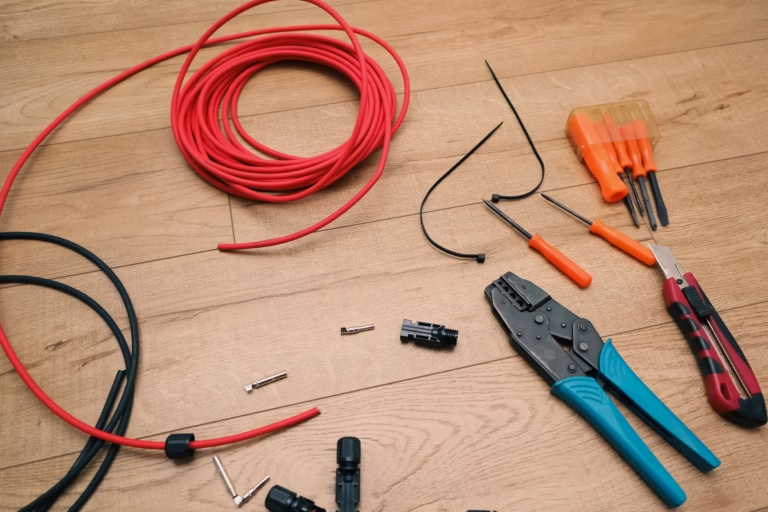
Do I need an electrician or a permit?In states where the law is currently active (Utah, Maryland, Vermont, Virginia), no formal permit or interconnection application is typically required for a small plug-in kit, though Maryland requires pre-installation notification and some states require an electrician above 420W. Outside those states, most people install these as a standard appliance plugged into an existing outlet — no electrician needed for the hardware itself, though you should still confirm your specific utility’s stance, since requirements can change as more state laws take effect.
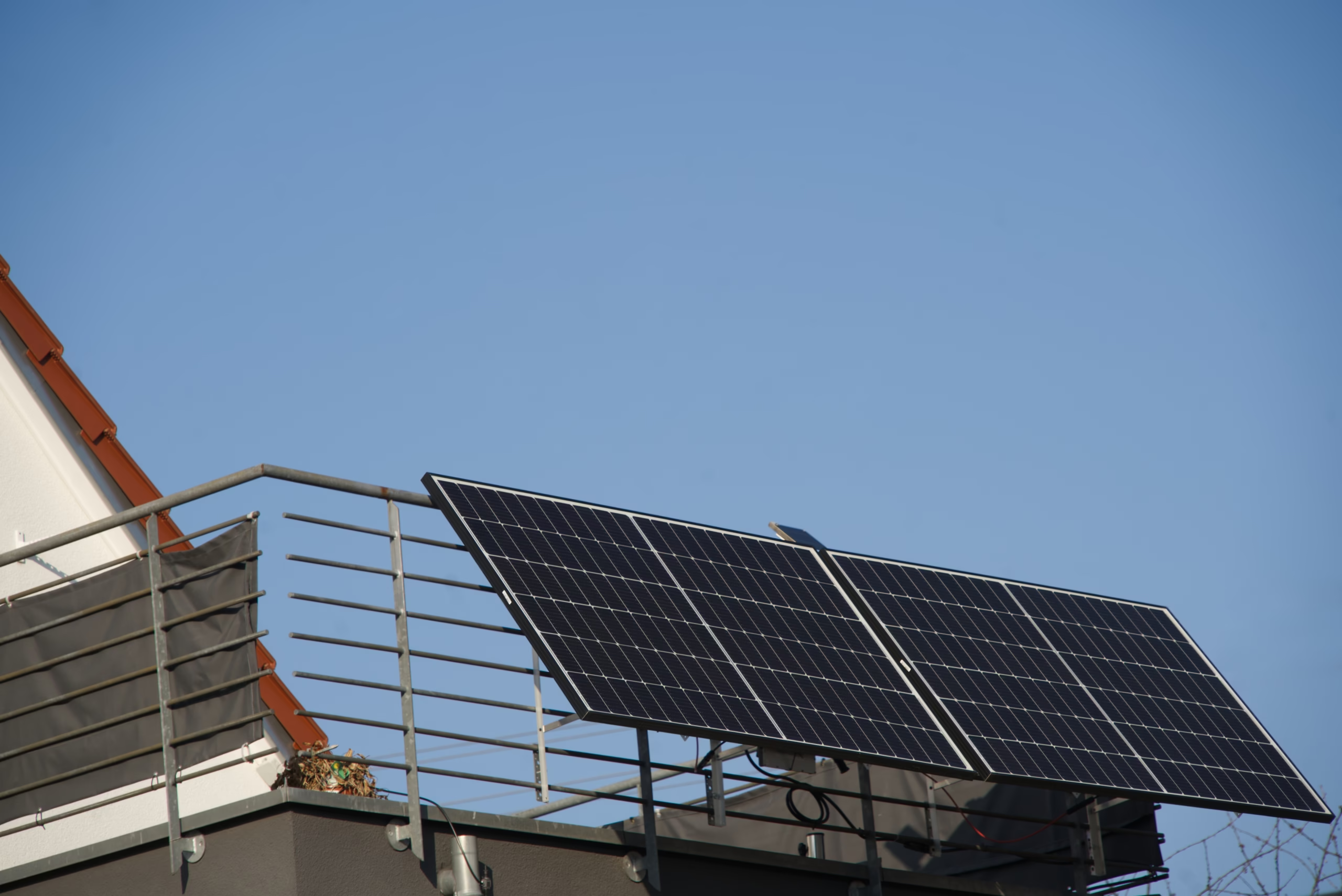
Can I install one if I rent my apartment?Yes, in principle — most balcony solar kits mount to a railing with clamps or brackets rather than permanent screws, and unplug and travel with you when you move. The bigger hurdle for renters is usually the lease or HOA, not the electrical code.
Will my landlord or HOA allow it?This is a separate question from state legality, and it’s the one that trips up the most people. Many leases restrict exterior balcony modifications regardless of what the state allows. Always check your lease or HOA rules and, ideally, get written approval before installing — even in an exemption state.
How much power does a balcony solar system actually produce?A typical 400–1,200W kit on a south-facing balcony with good sun exposure produces enough to offset a meaningful chunk of daytime electricity use — think a few dollars a month in savings, not a replacement for your utility bill. Output drops significantly on north-facing or heavily shaded balconies.
What happens to the extra power if I'm not using it?Most plug-in systems simply feed excess power back into your home’s internal circuit, where it gets used by whatever else is running on that circuit. Unlike full rooftop solar with net metering, you generally aren’t credited by the utility for power you don’t use — the panel just quietly reduces what you’d otherwise pull from the grid.
Is balcony solar safe?Reputable balcony solar kits (like EcoFlow’s STREAM system) are built with the same safety certifications as other consumer electronics and include automatic shutoff if the connection is interrupted. As with any electrical device, avoid off-brand kits with no safety certification, and don’t overload a single outlet or extension cord.
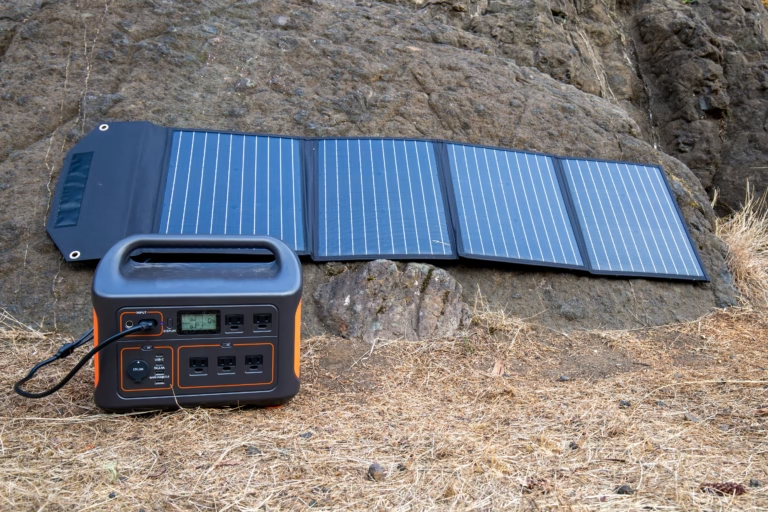
Can I combine balcony solar with a portable power station?Yes — this is actually one of the most popular setups. Instead of feeding directly into your home circuit, you can run the panel into a portable power station’s battery, then use that stored power on your own schedule, including after dark or during an outage.
Check Balcony Solar Panel Kit on Amazon → Check Ecoflow STREAM Solar on Amazon →
Where Balcony Solar Is Explicitly Legal
| State |
Status |
| Utah |
In effect since May 2025 — up to 1,200W |
| Maine |
Signed; phasing in starting mid-to-late July 2026 — up to 1,200W (over 420W needs a licensed electrician plus utility notice) |
| Virginia |
In effect since July 1, 2026 — up to 1,200W, no permit or utility approval required |
| Maryland |
In effect since May 2026 — up to 1,200W (pre-installation utility notification required) |
| Vermont |
In effect since July 1, 2026 — up to 1,200W per electric meter |
| Connecticut |
Signed; effective October 1, 2026 — up to 1,200W |
| New Hampshire |
Signed July 2026 — up to 1,200W (effective date still rolling out — confirm current status) |
| Colorado |
Signed; not effective until January 1, 2027 — up to 1,920W |
For the full breakdown of what the hardware looks like, typical costs, and a getting-started checklist, see our complete guide: Balcony Solar in the US (2026).
Read next: Balcony Solar in the US (2026): What's Legal, What Works, What to Buy
B
The Brofessionals Editors
We research generators, solar, garden gear, and DIY tools, then cross-check every pick against manufacturer specs and real-world discussion. No pay-to-play placements — just gear we would run ourselves. How we test.