Where Plug-In Solar Is Legal in 2026: All 50 States Checked
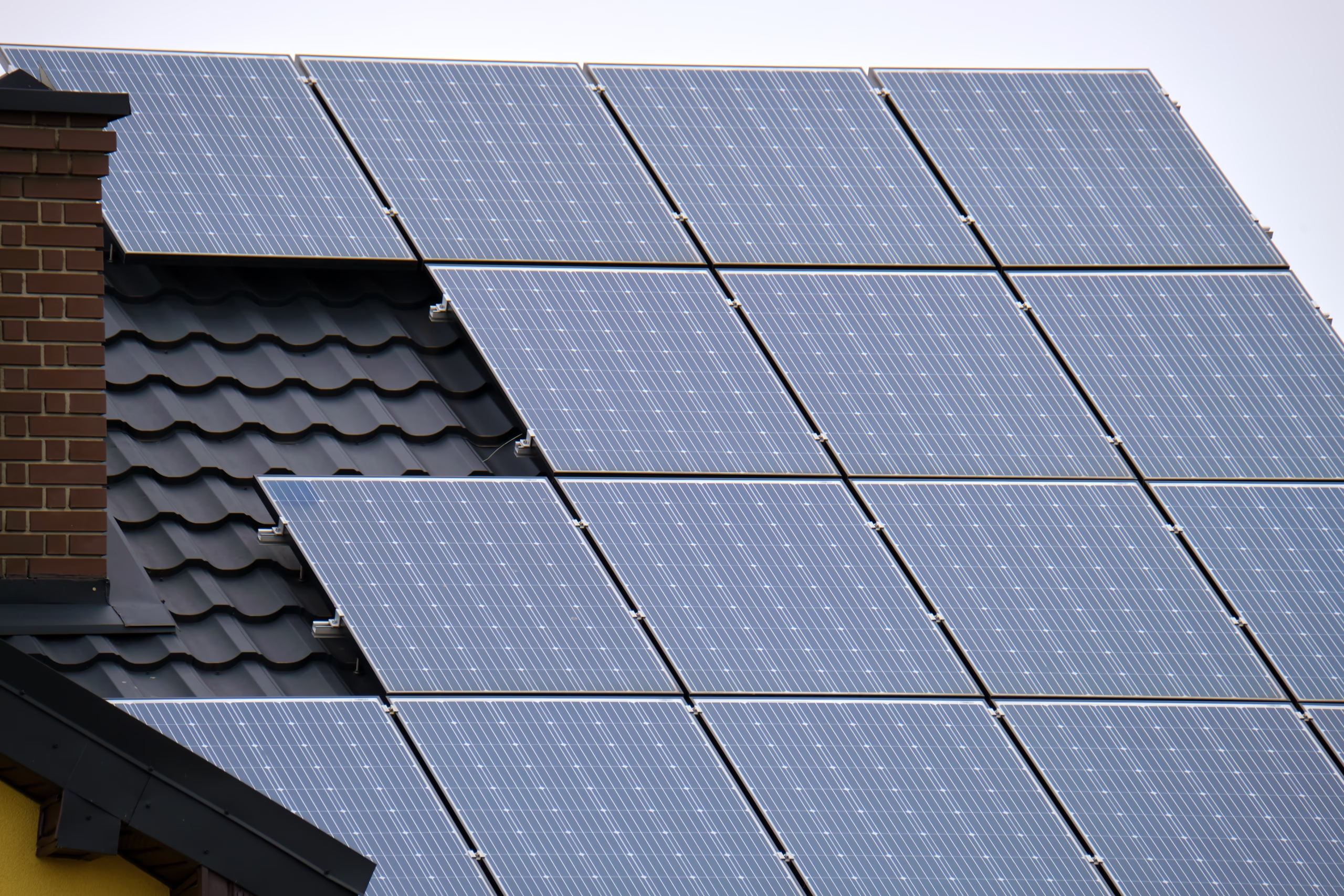
Eight states have signed plug-in solar into law, two more are one signature away, and the rest are still a patchwork. Here’s the full 50-state breakdown, state by state, as of July 2026.
The Brofessionals is reader-supported. When you buy through links on this page we may earn a small commission at no extra cost to you. As an Amazon Associate we earn from qualifying purchases. See our full disclosure.
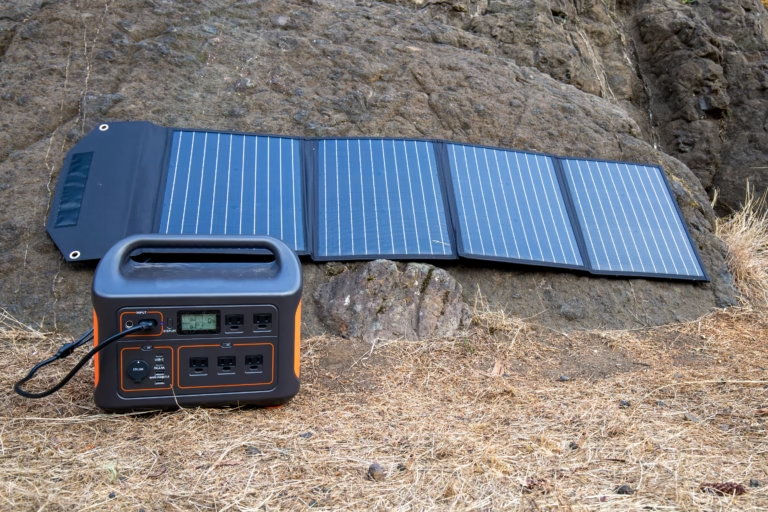
Plug-in solar — a panel or two that mounts to a railing or wall and feeds power straight into a standard outlet — is one of the fastest-moving corners of state energy policy right now. We covered the core legal picture in our balcony solar legal guide, but readers kept asking for one thing: a single reference table covering all 50 states, not just the ones that have already passed a law. This is that table.
The 8 States With Signed Plug-In Solar Laws
As of July 2026, eight states have signed dedicated plug-in solar exemption laws. Not all are in effect yet. This table matches the status we verified in our balcony solar legal guide — we’re keeping the two pieces in sync as laws change.
| State | Status |
|---|---|
| Utah | In effect since May 2025 — up to 1,200W |
| Maine | Signed; phasing in starting mid-to-late July 2026 — up to 1,200W (over 420W needs a licensed electrician plus utility notice) |
| Virginia | In effect since July 1, 2026 — up to 1,200W, no permit or utility approval required |
| Maryland | In effect since May 2026 — up to 1,200W (pre-installation utility notification required) |
| Vermont | In effect since July 1, 2026 — up to 1,200W per electric meter |
| Connecticut | Signed; effective October 1, 2026 — up to 1,200W |
| New Hampshire | Signed July 2026 — up to 1,200W (effective date still rolling out — confirm current status) |
| Colorado | Signed; not effective until January 1, 2027 — up to 1,920W |
Two States One Signature Away
New York and New Jersey have both passed plug-in solar bills through their full legislatures and are waiting on a governor’s signature. Neither is law yet, so treat both as gray-area until that changes.
New York
- The SUNNY Act cleared both chambers of the legislature in June 2026
- Now on Governor Hochul’s desk — not yet signed as of our last check
- Follows the common 1,200W framework used by most other states
New Jersey
- The Garden State Balcony Solar Act (S2368) passed unanimously in July 2026
- Awaiting the governor’s signature — not yet law
- Also expected to follow the 400–1,200W plug-in framework
Full 50-State Reference Table
Here’s every state (plus Washington D.C.), sorted alphabetically, with its current status. “Gray area” means plug-in solar isn’t explicitly banned, but there’s no formal exemption law yet — you’d be relying on your utility’s general interconnection rules, which vary widely and were not written with plug-in kits in mind. A meaningful number of gray-area states below have active bills sitting in committee; we’ve flagged the ones we could confirm, but committee activity moves fast, so treat that flag as a starting point for your own check, not a guarantee.
| State | Status | Note |
|---|---|---|
| Alabama | Gray area | No dedicated law yet |
| Alaska | Gray area | No dedicated law yet |
| Arizona | Gray area | No dedicated law yet |
| Arkansas | Gray area | No dedicated law yet |
| California | Active bill | Legislation introduced as of July 2026 — not yet passed |
| Colorado | Signed, not yet effective | Effective Jan 1, 2027 — up to 1,920W |
| Connecticut | Signed, not yet effective | Effective Oct 1, 2026 — up to 1,200W |
| Delaware | Active bill | Legislation introduced as of July 2026 — not yet passed |
| Florida | Gray area | No dedicated law yet |
| Georgia | Gray area | No dedicated law yet |
| Hawaii | Active bill | Legislation introduced as of July 2026 — not yet passed |
| Idaho | Gray area | No dedicated law yet |
| Illinois | Active bill | Legislation introduced as of July 2026 — not yet passed |
| Indiana | Gray area | No dedicated law yet |
| Iowa | Gray area | No dedicated law yet |
| Kansas | Gray area | No dedicated law yet |
| Kentucky | Gray area | No dedicated law yet |
| Louisiana | Gray area | No dedicated law yet |
| Maine | Signed, phasing in | Rolling out mid-to-late July 2026 — up to 1,200W |
| Maryland | In effect | Since May 2026 — up to 1,200W, utility notice required |
| Massachusetts | Active bill | Legislation introduced as of July 2026 — not yet passed |
| Michigan | Gray area | No dedicated law yet |
| Minnesota | Gray area | No dedicated law yet |
| Mississippi | Gray area | No dedicated law yet |
| Missouri | Gray area | No dedicated law yet |
| Montana | Gray area | No dedicated law yet |
| Nebraska | Gray area | No dedicated law yet |
| Nevada | Gray area | No dedicated law yet |
| New Hampshire | Signed | Signed July 2026 — effective date still rolling out |
| New Jersey | Awaiting governor | S2368 passed legislature July 2026 — not yet law |
| New Mexico | Gray area | No dedicated law yet |
| New York | Awaiting governor | SUNNY Act passed legislature June 2026 — not yet law |
| North Carolina | Active bill | Legislation introduced as of July 2026 — not yet passed |
| North Dakota | Gray area | No dedicated law yet |
| Ohio | Gray area | No dedicated law yet |
| Oklahoma | Active bill | Legislation introduced as of July 2026 — not yet passed |
| Oregon | Gray area | No dedicated law yet |
| Pennsylvania | Gray area | No dedicated law yet |
| Rhode Island | Gray area | No dedicated law yet |
| South Carolina | Gray area | No dedicated law yet |
| South Dakota | Gray area | No dedicated law yet |
| Tennessee | Gray area | No dedicated law yet |
| Texas | Gray area | No dedicated law yet |
| Utah | In effect | Since May 2025 — up to 1,200W |
| Vermont | In effect | Since July 1, 2026 — up to 1,200W per meter |
| Virginia | In effect | Since July 1, 2026 — up to 1,200W, no permit needed |
| Washington | Gray area | No dedicated law yet |
| Washington D.C. | Active bill | Legislation introduced as of July 2026 — not yet passed |
| West Virginia | Gray area | No dedicated law yet |
| Wisconsin | Gray area | No dedicated law yet |
| Wyoming | Gray area | No dedicated law yet |
What “Gray Area” Actually Means
Being in a gray-area state doesn’t mean plug-in solar is illegal — it means there’s no dedicated state law that exempts small plug-in systems from standard interconnection rules. In practice, that leaves you dependent on your specific utility’s policies, which were almost never written with a 400–1,200W plug-in kit in mind. Some utilities will look the other way on a single small panel; others technically require a full interconnection application meant for rooftop systems many times larger. There’s no way to generalize this at the state level, which is exactly why the states above have been passing dedicated exemption laws in the first place — to remove that ambiguity.
If you’re in an exemption state
- Confirm your effective date — signed isn’t the same as active
- Check the wattage cap and any utility-notice requirement
- Size your kit to the cap, not the other way around
If you’re in a gray-area state
- Call your utility before you buy anything
- Ask specifically about small plug-in / micro-inverter systems, not full rooftop solar
- Check your lease or HOA rules separately — they aren’t affected by any of this
For the buying-guide side of this — what the hardware looks like, pros and cons, and a getting-started checklist — see our full balcony solar guide. If you’re weighing whether it’s worth it at all for your situation, our balcony solar FAQ covers the practical questions renters and condo owners ask most.
Check Balcony Solar Panel Kit on Amazon →
FAQ
Read next: Balcony Solar in the US (2026): What’s Legal, What Works, What to Buy · Can You Put Solar Panels on Your Balcony? (FAQ) · More Solar Guides