MC4, XT60, Anderson: The Solar Connector Guide for Power Station Owners
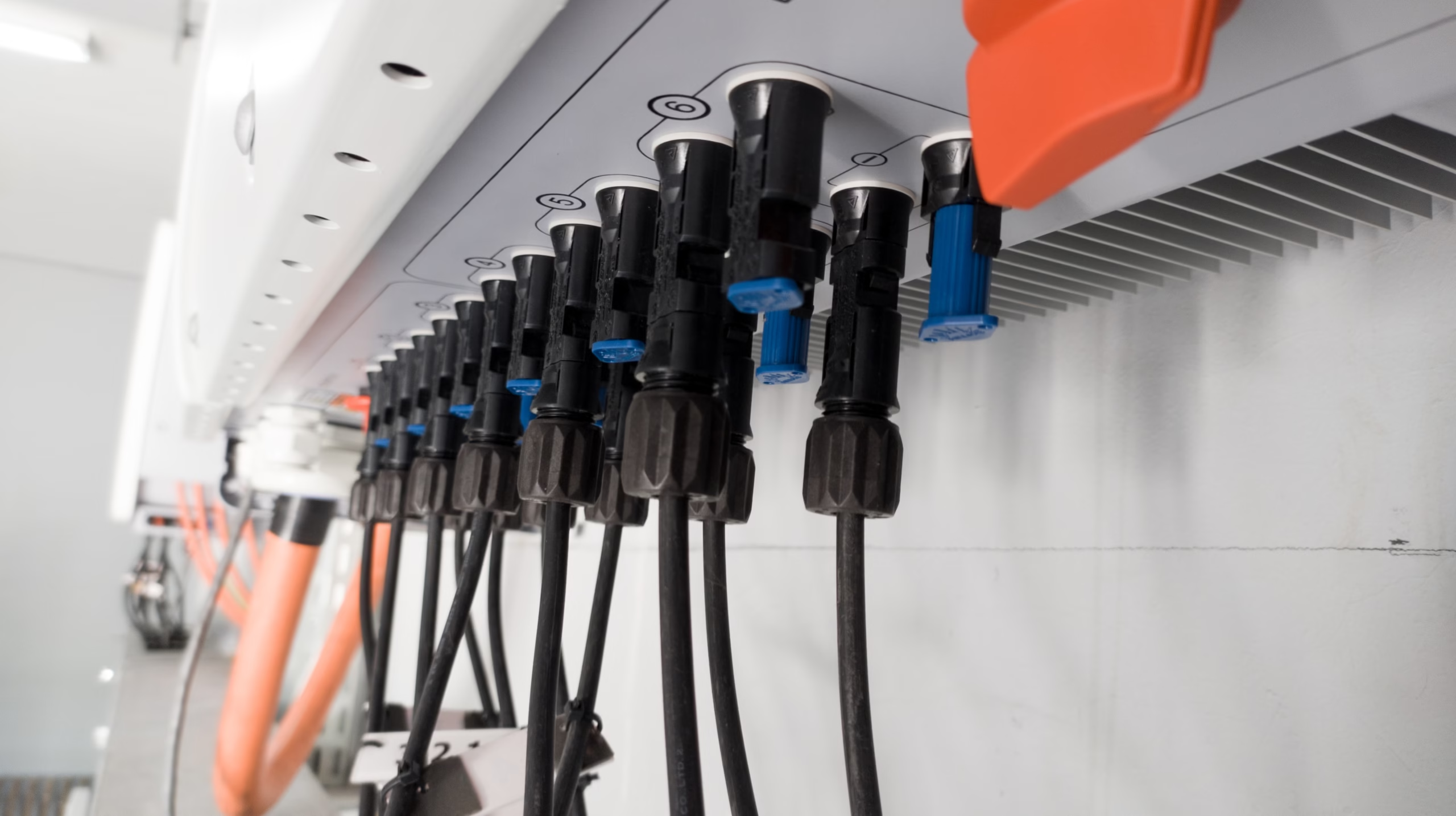
MC4, XT60, and Anderson Powerpole all show up on solar gear, and none of them fit each other. Here is what each connector is actually for, which brands use which, and exactly how to adapt between them without frying your power station.
The Brofessionals is reader-supported. When you buy through links on this page we may earn a small commission at no extra cost to you. As an Amazon Associate we earn from qualifying purchases. See our full disclosure.
If you own a power station and any solar panel that did not come bundled with it, there is a good chance you have run into a connector that does not fit. There are really only three connector types you will encounter across portable power stations and solar panels, and each one exists for a different reason. Here is what each one is for, which brands use which, and how to adapt safely between them.
The Three Connectors You Will Actually Run Into
MC4
MC4 (Multi-Contact 4) is the universal industry standard for solar panel leads. If you buy a rigid or portable solar panel from almost any brand, it will ship with MC4 connectors already attached. They are IP67-rated and weatherproof, designed to sit outdoors for years on a rooftop array, and they lock together with a distinct click that requires a small dedicated tool (or firm, deliberate pressure) to disconnect — a deliberate design choice to prevent accidental disconnection outdoors.
XT60 (and XT60i)
XT60 is a compact bullet-style connector that originated in the RC hobby world (drones, RC cars) before the portable power station industry adopted it for solar charging ports. It handles high current in a small footprint — up to roughly 60A peak, 30A continuous — but it is not weatherproof and has no IP rating, which is why you will find it on the power station’s input port rather than out on the panel end of a cable. EcoFlow uses a variant called XT60i on many of its newer models, which adds a small third pin used to help the station identify the charging source; see our EcoFlow compatibility guide for how that plays out in practice.
Anderson Powerpole
Anderson Powerpole connectors are modular, genderless blocks that click together in either orientation, which is why they are popular in ham radio, van-build DC distribution, and other custom off-grid electrical setups. They are rated up to roughly 45A depending on contact size. Because they are genderless, consistent color-coded and keyed assembly (red contact on the right when facing the connector, per the widely used ARES/RACES standard) is what prevents a polarity reversal between two independently assembled cables — it is a real risk if two people wire their ends differently, not a risk inherent to the connector itself.
Connector Reference Table
| Connector | Common Use | Brands That Use It | Weatherproof | Adapter Needed |
|---|---|---|---|---|
| MC4 | Solar panel leads (industry standard) | Nearly all panel brands: Renogy, Jackery, Bluetti, ACOPOWER, GRECELL, and more | Yes (IP67) | MC4-to-XT60/XT60i or MC4-to-Anderson to reach most power stations |
| XT60 / XT60i | Power station solar input port | EcoFlow (XT60i on many models), several other power station brands use plain XT60 | No | MC4-to-XT60 or MC4-to-XT60i, matched to your exact model |
| Anderson Powerpole | Custom DC distribution, van builds, ham radio, off-grid panel banks | Not typically stock on panels or stations; added by installers and hobbyists | No | MC4-to-Anderson if wiring into a custom DC system |
How to Adapt Between Them Safely
Do
- Match voltage and current ratings on both sides of any adapter, not just the physical fit
- Use a purpose-made adapter cable rather than forcing connectors together
- Keep XT60 and Anderson connections under cover — they are not weatherproof like MC4
- Double-check polarity on any Anderson Powerpole cable you assemble yourself
Don't
- Assume any two connectors of the same physical size are rated for the same amperage
- Leave an XT60 or Anderson connection exposed to rain or snow long-term
- Mix and match adapter cables from unknown sources without checking gauge and rating
- Ignore your power station’s voltage window when adapting a panel — the connector fitting does not mean the voltage is safe, see our Voc guide for that math
Adapters and Kits Worth Having
If you regularly mix panel and power station brands, it is worth keeping a small set of adapters on hand rather than buying a new panel-specific cable every time.
Check MC4 to XT60 Adapter Cable on Amazon → Check MC4 to Anderson Powerpole Adapter on Amazon → Check Anderson Powerpole Connector Kit on Amazon →
FAQ
Read next: Third-Party Solar Panels That Work With EcoFlow · Best 200W Portable Solar Panels of 2026 · Balcony Solar in the US: What’s Legal, What to Buy. For more gear across the category, see our full solar buying guide.