Raised Garden Bed Soil Calculator + Soil Mix
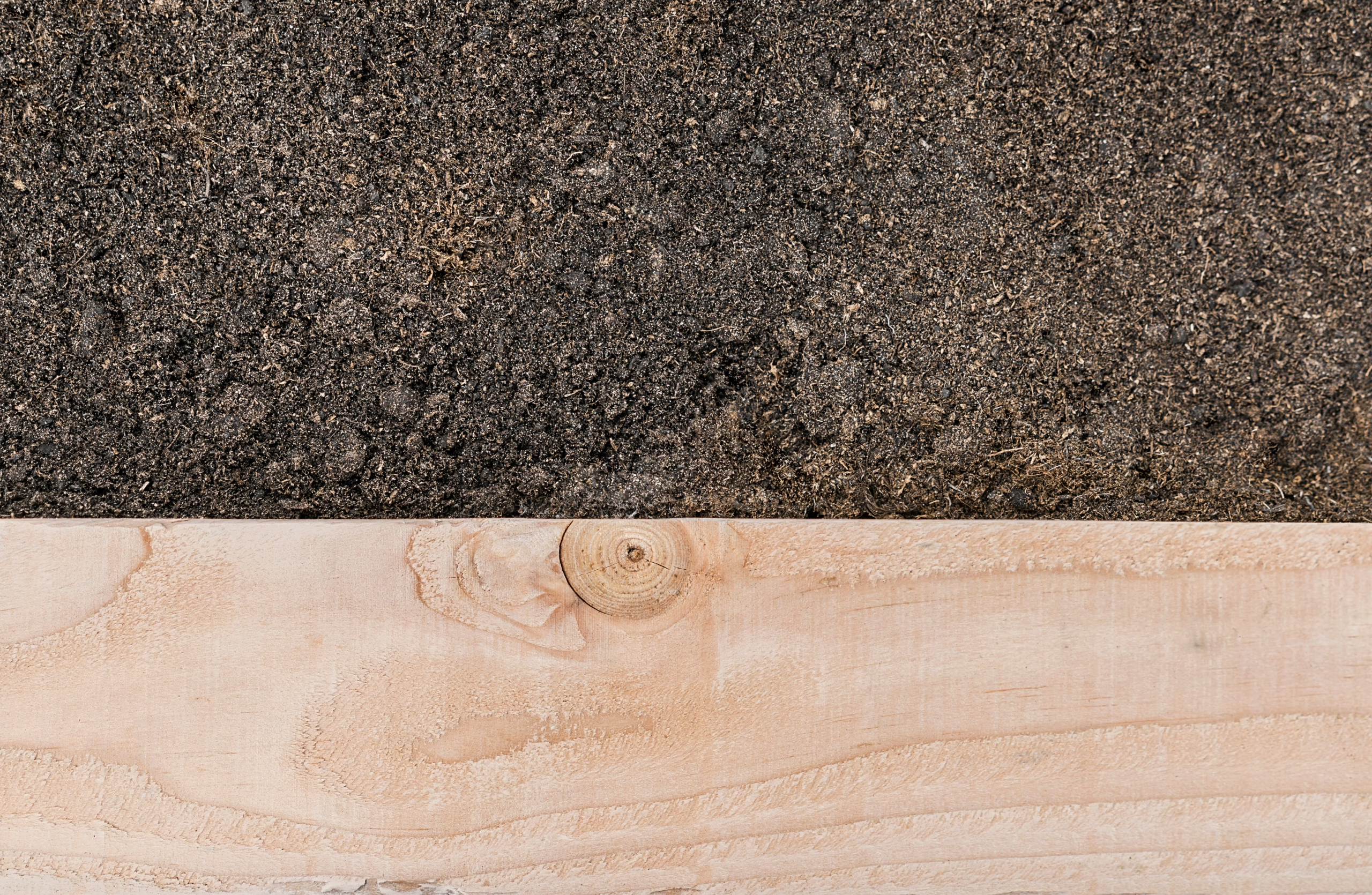
Guessing how much soil to order is how you end up with three leftover bags or a bed that’s four inches short. Here’s the actual formula, a reference table for common bed sizes, and the soil mix ratio that keeps plants healthy instead of waterlogged.
The Brofessionals is reader-supported. When you buy through links on this page we may earn a small commission at no extra cost to you. As an Amazon Associate we earn from qualifying purchases. See our full disclosure.
Raised bed soil is sold and delivered by volume — cubic feet in bags, cubic yards in bulk — so getting the math right before you order saves you a second trip (or a pile of unused soil bags in the garage). The good news: the formula is simple, and once you know your bed’s dimensions you can calculate it in seconds.
The Formula
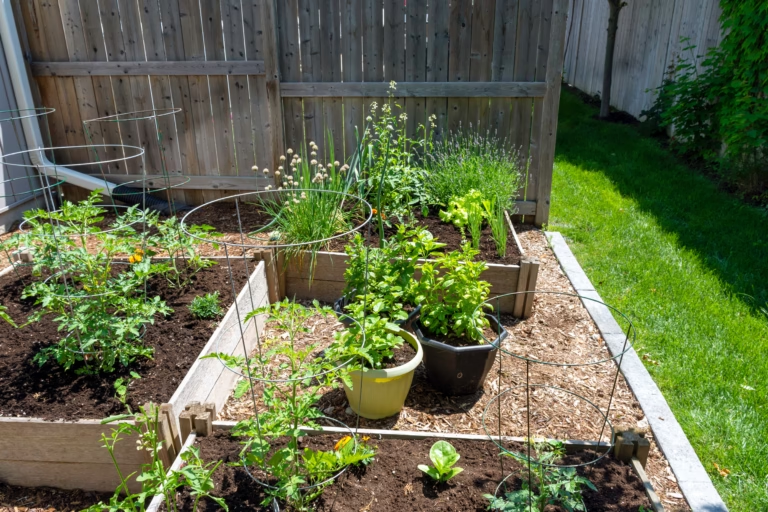
Example: a 4×8-foot bed filled 12 inches deep is 4 × 8 × 1 = 32 cubic feet, or 32 ÷ 27 ≈ 1.19 cubic yards. That’s the number you’d give a bulk soil supplier, or use to count bagged soil (most bags are 1.5 or 2 cubic feet).
Reference Table: Common Raised Bed Sizes
| Bed Size | Depth | Cubic Feet | Cubic Yards |
|---|---|---|---|
| 2′ × 4′ | 10″ | ~6.7 cu ft | ~0.25 cu yd |
| 3′ × 3′ | 10″ | ~7.5 cu ft | ~0.28 cu yd |
| 3′ × 6′ | 10″ | ~15 cu ft | ~0.56 cu yd |
| 4′ × 4′ | 10″ | ~13.3 cu ft | ~0.49 cu yd |
| 4′ × 4′ | 12″ | 16 cu ft | ~0.59 cu yd |
| 4′ × 8′ | 10″ | ~26.7 cu ft | ~0.99 cu yd |
| 4′ × 8′ | 12″ | 32 cu ft | ~1.19 cu yd |
| 4′ × 8′ | 18″ | 48 cu ft | ~1.78 cu yd |
The Best Soil Mix Ratio for Raised Beds
Never fill a raised bed with plain garden topsoil or fill dirt alone — in a contained, above-ground bed it compacts, drains poorly, and starves roots of oxygen. Raised beds need a blended mix of topsoil, compost, and an aeration material.
| Mix Style | Ratio (by volume) | Best For |
|---|---|---|
| Budget-friendly | 60% topsoil / 30% compost / 10% aeration (perlite or coarse sand) | Large beds where cost matters most; still drains and feeds reasonably well |
| Balanced (most recommended) | 40% topsoil / 40% compost / 20% aeration (perlite or vermiculite) | Most vegetable and herb beds — the standard go-to ratio |
| Premium / “Mel’s Mix” style | ⅓ compost blend / ⅓ peat moss or coco coir / ⅓ coarse vermiculite | Intensive square-foot gardening, containers, or beds with poor native drainage |
Check Raised Bed Garden Soil on Amazon → Check Perlite Soil Aerator on Amazon →
Aeration Material: Perlite or Vermiculite?
Perlite
- Excellent drainage, lightweight
- Holds less water — better for wet climates or beds prone to sogginess
- Doesn’t compact over time
Vermiculite
- Holds more moisture than perlite
- Better choice in hot, dry climates where beds dry out fast
- Slightly better at retaining nutrients
How to Use the Formula for Any Bed
1. Measure your bed’s inside length, width, and depth in feet (convert inches by dividing by 12).
2. Multiply length × width × depth to get cubic feet.
3. Divide by 27 if you need cubic yards for a bulk delivery order.
4. Add 10–15% to account for settling.
5. Split that total across topsoil, compost, and aeration material using your chosen ratio above.
FAQ
Read next: How to Fill a Raised Bed for Almost Free · Raised Garden Bed Plans + Free Cut List · 7 Beginner Raised Bed Mistakes to Avoid · Best Pre-Made Raised Garden Bed Kits 2026