Best Backyard Greenhouse Kits 2026
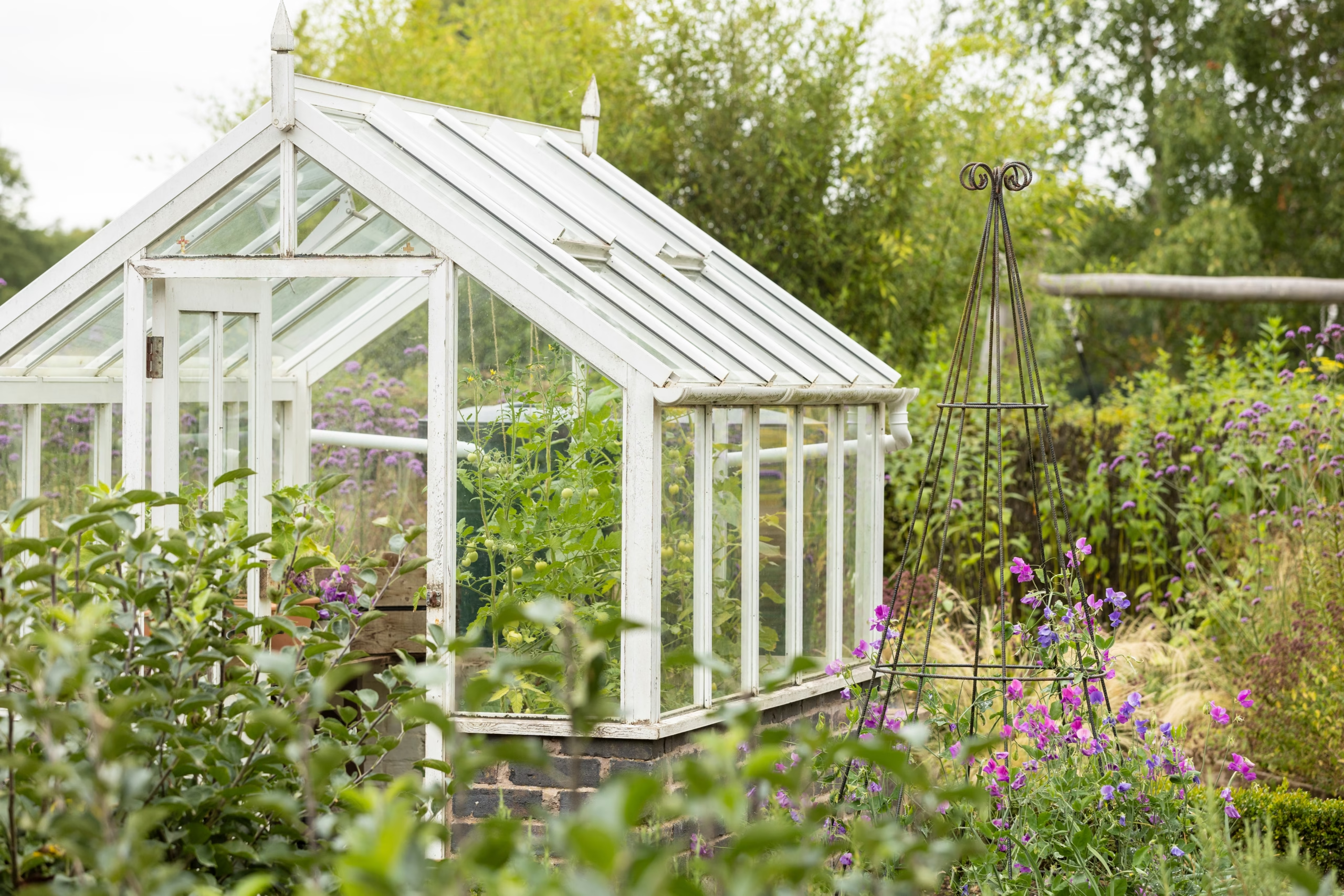
From a $100 pop-up you can fold away in October to a $1,800 cedar-and-polycarbonate structure built to stay up year-round, here’s how backyard greenhouse kits actually compare on size, material, and what they’re each really built for.
The Brofessionals is reader-supported. When you buy through links on this page we may earn a small commission at no extra cost to you. As an Amazon Associate we earn from qualifying purchases. See our full disclosure.
“Greenhouse kit” covers a huge range of products, from a PVC-frame pop-up you can assemble solo in an afternoon to a permanent cedar structure that needs a weekend and a helper. The right one depends less on budget alone and more on how you’ll actually use it: extending a spring seed-starting window, overwintering tender potted plants, or growing vegetables and flowers year-round in a climate-controlled space. We’ve grouped four kits across that full range below, from budget pop-up to premium cedar-and-polycarbonate.
Greenhouse Kits Compared
| Kit | Size | Material | Price Tier | Best For |
|---|---|---|---|---|
| Yesker Walk-In Pop-Up Greenhouse | 57″ x 29″ x 77″ | Steel frame, PE cover | Budget (under $150) | Seasonal seed-starting, overwintering potted plants |
| Veikous 6×8 Walk-In Greenhouse | 6′ x 8′ | Aluminum frame, twin-wall polycarbonate | Value (roughly $350–$450) | Entry-level permanent structure with real insulation |
| PABIMIA 8×16 Aluminum Greenhouse | 8′ x 16′ | Rust-resistant aluminum, 4mm double-wall polycarbonate | Mid-range (around $550) | Serious hobby growers who need real square footage |
| Backyard Discovery Willow Cedar Greenhouse | 9′ x 6′ (54 sq ft) | Natural cedar frame, 4-wall polycarbonate | Premium (around $1,800) | Year-round growing with power, ventilation, and workspace built in |
1. Yesker Walk-In Pop-Up Greenhouse — Best Budget Pop-Up
At 57 x 29 x 77 inches, the Yesker is sized more like a large cold frame than a full greenhouse, but that’s the point — it’s a low-commitment way to extend your growing season without a permanent structure. It has a steel frame, a waterproof PE cover, roll-up zippered doors and windows for ventilation, and four mesh shelves across three tiers so you can stage a real number of seed trays or potted plants. One person can assemble it without tools in under an hour, and it folds down for off-season storage, which matters if you’re in a climate where you’d rather not fight a PE cover through a windy winter.
Pros
- Lowest cost of entry on this list, with tool-free assembly
- Four shelves make good use of a small footprint
- Folds down for storage — no permanent commitment to a spot in the yard
Cons
- PE cover doesn’t insulate or last as long as polycarbonate panels
- Too small for anything beyond seed-starting and overwintering a modest number of potted plants
Check Yesker Walk-In Pop-Up Greenhouse on Amazon →
2. Veikous 6×8 Walk-In Greenhouse — Best Entry-Level Permanent Structure
This is where “greenhouse kit” starts meaning an actual structure rather than a glorified cold frame. The Veikous 6×8 has a powder-coated aluminum frame and twin-wall polycarbonate panels, which insulate meaningfully better than a PE cover and hold up to real weather rather than needing to come down every fall. It includes an adjustable roof vent for temperature control and a lockable door. Assembly takes a weekend rather than an afternoon, and it’s meant to stay in one spot as a permanent fixture rather than fold away.
Pros
- Twin-wall polycarbonate insulates and diffuses light far better than a PE or single-wall cover
- Aluminum frame won’t rot or rust like an untreated wood frame
- Adjustable roof vent gives real temperature control on hot days
Cons
- Weekend-length assembly with a second person recommended
- No built-in power, fan, or shelving — those are separate purchases
Check Veikous 6×8 Walk-In Greenhouse on Amazon →
3. PABIMIA 8×16 Aluminum Greenhouse — Best for Serious Hobby Growers
Doubling the footprint of the Veikous, the PABIMIA 8×16 gives serious vegetable and flower growers enough room for multiple raised beds or benches inside a single structure. It uses a rust-resistant aluminum frame with 4mm double-wall polycarbonate panels and includes an adjustable roof vent. PABIMIA also sells this same build in smaller footprints (6×10, 8×10) if 8×16 is more space than your yard can fit, so it’s worth checking their full size range before you commit to the largest option.
Pros
- 128 square feet of growing space at a mid-range price point
- Rust-resistant aluminum frame built for long-term outdoor exposure
- Available in multiple sizes from the same manufacturer if 8×16 is too large
Cons
- Larger footprint needs a genuinely flat, prepared site and likely a permit check in some municipalities
- No integrated power or ventilation fan out of the box
Check PABIMIA 8×16 Aluminum Greenhouse on Amazon →
4. Backyard Discovery Willow Cedar Greenhouse — Best Premium Pick
The Willow is built more like a small outbuilding than a kit greenhouse. Natural cedar framing paired with commercial-grade 4-wall polycarbonate panels gives it both good looks and real insulation, and it comes with features the budget options don’t: a temperature-activated exhaust fan, an easy-open window for cross-ventilation, built-in staging shelves, a workstation with hose hook-ups, and an integrated PowerPort with three electrical outlets and USB ports. Backyard Discovery rates it to withstand up to 2,800 pounds of roof load and 100 mph winds, and at 54 square feet it comfortably fits multiple growing benches. This is the pick for someone who wants a genuine year-round growing space and is willing to pay a premium price for cedar construction and built-in utilities instead of adding them later.
Pros
- Built-in exhaust fan, window, shelving, and electrical PowerPort — no separate purchases needed
- Cedar frame looks better and lasts longer outdoors than untreated wood or basic aluminum
- Rated for 100 mph winds and up to 2,800 lbs of roof load
Cons
- By far the highest price on this list
- Largest assembly commitment — plan for a full weekend with help
Check Backyard Discovery Willow Cedar Greenhouse on Amazon →
How to Pick the Right Size and Material
If you’re extending a spring seed-starting window or overwintering a modest number of potted plants, a pop-up like the Yesker is genuinely enough and avoids paying for structure you won’t use. If you want a permanent, four-season growing space, budget for polycarbonate at minimum, and treat built-in ventilation (an adjustable roof vent at minimum, an exhaust fan ideally) as a requirement rather than a nice-to-have — a sealed greenhouse in direct summer sun can exceed 120°F within an hour without airflow.
Growing vegetables inside your greenhouse? Our drip irrigation kits guide covers consistent watering for raised beds, and if tomato leaves start curling in the heat, see our tomato leaf curling diagnostic. Browse more garden guides for the full lineup.
FAQ
Read next: Best Drip Irrigation Kits for Raised Beds · What to Plant in August — Zone 7