Raised Garden Bed Plans + Free Cut List
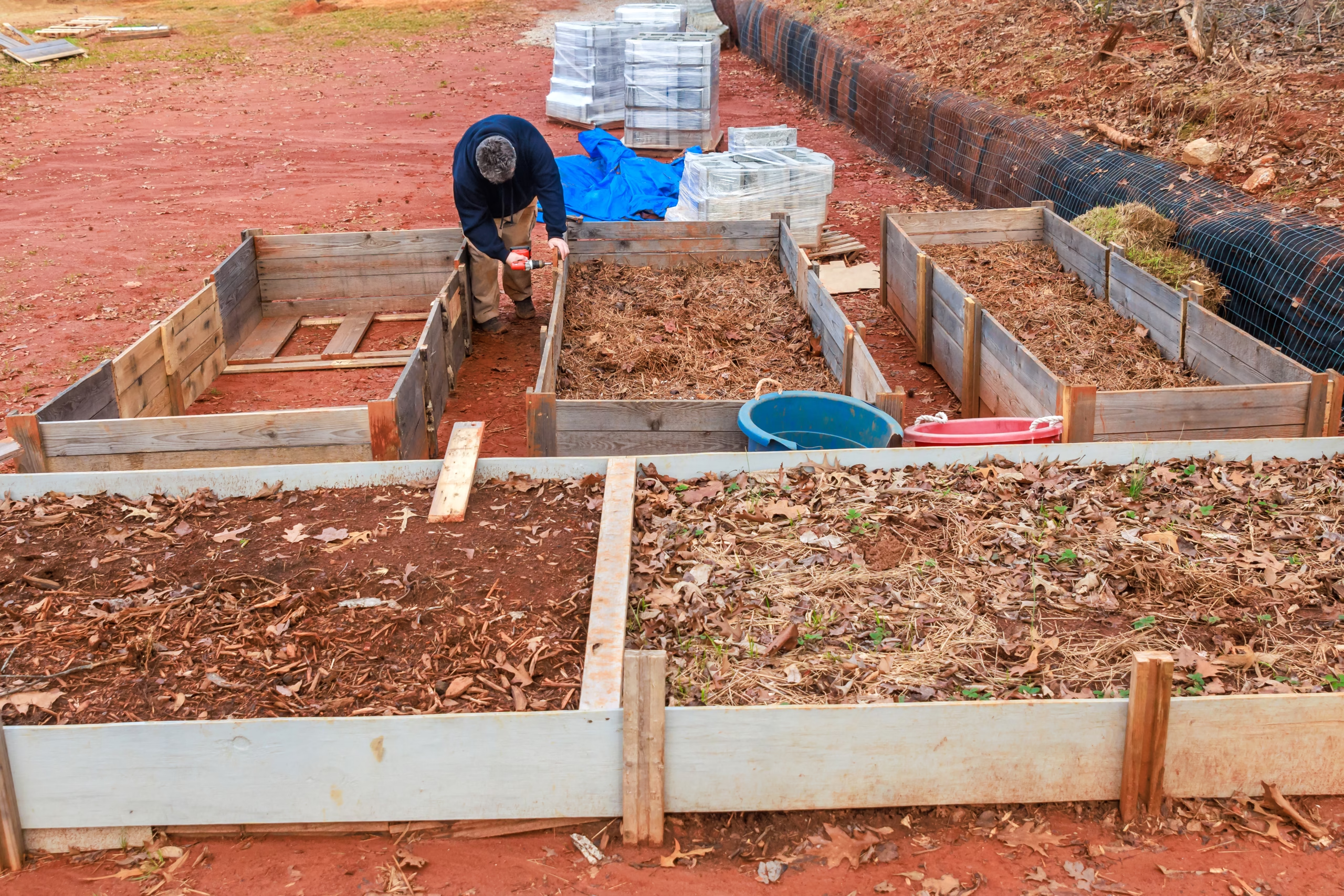
A basic cedar raised bed is one of the simplest weekend builds in the yard — six boards (cut into eight pieces), four short posts, a box of screws. Here’s a real cut list for a standard 4×8 bed (plus a 4×4 option) and the assembly steps to go with it.
The Brofessionals is reader-supported. When you buy through links on this page we may earn a small commission at no extra cost to you. As an Amazon Associate we earn from qualifying purchases. See our full disclosure.
Cedar is the go-to wood for raised beds because it resists rot and insects naturally, without the chemicals used in pressure-treated lumber — important since you’re growing food in it. A well-built cedar frame typically lasts many years longer than untreated pine, with no chemical treatment. This plan uses standard 2×6 boards (actual size 1½″ × 5½″, so two stacked boards make an 11″ wall) and 4×4 corner posts, which keeps the cut list short and the build beginner-friendly. If you buy rough-sawn cedar, boards run slightly thicker and taller.
Materials List: 4×8 Cedar Raised Bed (11″ Deep)
| Material | Quantity |
|---|---|
| 2″×6″×8′ untreated cedar boards | 6 |
| 4″×4″ cedar post, at least 4′ long (cut into four 11″ corner posts) | 4 |
| 3″ exterior deck screws | ~32 |
| Landscape fabric or cardboard (weed barrier, optional) | 1 roll / enough to line the base |
| Drill/driver + tape measure + square | — |
The Cut List
This layout uses an inside corner-post design: the short end boards fit between the long boards, and every board screws into a 4×4 post set inside each corner. That’s fast to build and forgiving of small measuring errors.
| Piece | Cut From | Qty | Finished Length |
|---|---|---|---|
| Long side boards | 2x6x8′ cedar (used whole, no cut) | 4 | 96″ (8′) |
| Short end boards | 2x6x8′ cedar, cut in half, then trimmed to 45″ | 4 | 45″ (fits between the long boards for a true 48″ outside width) |
| Corner posts | 4×4 cedar | 4 | 11″ (matches 2-board wall height) |
4×4 Bed Option
Want a smaller footprint instead? A 4×4 bed uses the same corner-post design but every board gets cut to 4 feet.
| Size | 2x6x8′ Boards Needed | Corner Posts | Approx. Soil Volume (11″ deep) |
|---|---|---|---|
| 4′ × 4′ | 4 (all cut in half → 8 pieces; trim 4 of them to 45″) | 4 at 11″ | ~13 cu ft |
| 4′ × 8′ | 6 (4 whole + 2 cut in half) | 4 at 11″ | ~26 cu ft inside (29 cu ft if measured to the outside) |
Check Cedar Raised Bed Lumber on Amazon → Check 3-Inch Deck Screws on Amazon →
Assembly Steps
1. Cut all boards to length per the cut list, or have the lumber yard do it when you buy.
2. Pre-drill screw holes near the ends of each board to prevent the cedar from splitting.
3. Attach one long board to two corner posts, screws flush, forming an L-shaped assembly. Repeat for the opposite long side.
4. Connect the two long-side assemblies with the short end boards to close the box into a rectangle. Check that it’s square by measuring both diagonals — they should match.
5. Add the second course of boards on top of the first, offsetting screw locations so you’re not driving into the same spot twice.
6. Level your site and lay landscape fabric or flattened cardboard on the ground if you want extra weed suppression.
7. Set the frame in place. If your ground isn’t level, dig out the high side or shim the low side so the frame sits flat. (If you want posts that anchor into the ground, cut them 16–18″ long instead of 11″ and bury the extra length.)
8. Fill the bed — see our guide to filling a bed cheaply with the hugelkultur method, or our soil calculator for exact volume needs.
Pros of This Design
- Only 3 material types (boards, posts, screws) — simple shopping list
- No pocket holes, brackets, or specialty joinery required
- Two board courses (11″) is deep enough for nearly every vegetable
- Cedar needs no paint, stain, or sealant to last a decade-plus
Cons to Consider
- Untreated cedar costs more upfront than pine or treated lumber
- Outside-corner-post design adds a few inches to the bed’s exterior footprint
- 11″ is on the shallow side for long carrots or parsnips if the ground under the bed is hard-packed
- Corner posts eventually need re-tightening as screws loosen with wood movement
FAQ
Read next: How to Fill a Raised Bed for Almost Free · Raised Garden Bed Soil Calculator + Soil Mix · Best Pre-Made Raised Garden Bed Kits 2026 · 7 Beginner Raised Bed Mistakes to Avoid
Sources
- UGA Extension: raised bed materials: cedar vs pine durability
- Oregon State Extension: treated lumber in raised beds: modern ACQ has no arsenic
Checked September 2026. Prices and specs change; confirm on the linked pages before you buy.