Jackery Explorer 1000 v2 vs EcoFlow DELTA 3 Plus: Which 1kWh Station Wins?
Two of the most popular 1kWh-class power stations, head to head — on capacity, output, recharge speed, and which one actually makes sense for your setup.
The Brofessionals is reader-supported. When you buy through links on this page we may earn a small commission at no extra cost to you. As an Amazon Associate we earn from qualifying purchases. See our full disclosure.
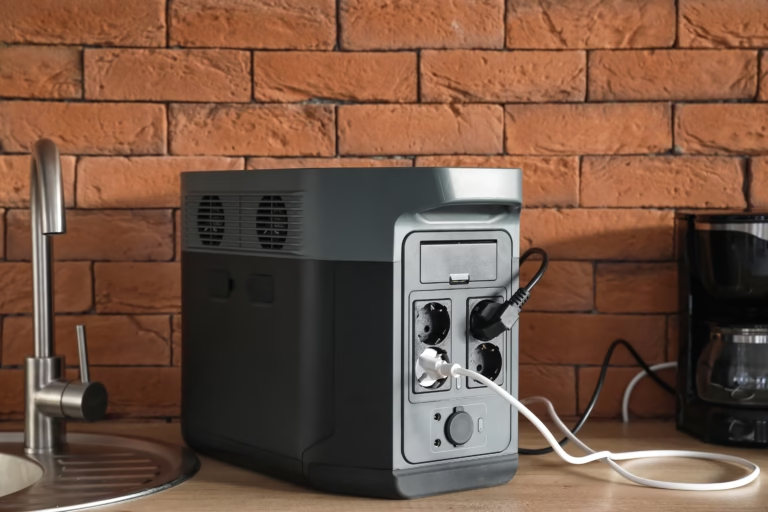
The Jackery Explorer 1000 v2 and the EcoFlow DELTA 3 Plus sit in the same rough price and capacity class, which is exactly why they get cross-shopped so often. Both will run a fridge through a multi-day outage, both fold into a camping kit, and both come from brands with genuine track records — so the decision comes down to a handful of real differences rather than one being simply “better.”
| Jackery Explorer 1000 v2 | Spec |
|---|---|
| Capacity | 1,070Wh |
| AC output | 1,500W continuous (3,000W surge) |
| Outlets | 3x AC, 2x USB-C, 2x USB-A, 12V car port |
| Recharge (AC, fast) | ~1.7 hours to 80% |
| Expandable | No built-in expansion battery port |
| Weight | ~29 lbs |
| EcoFlow DELTA 3 Plus | Spec |
|---|---|
| Capacity | 1,024Wh (expandable with extra battery packs) |
| AC output | 1,800W continuous, up to 2,200W with X-Boost (3,600W surge) |
| Outlets | 4x AC, 2x USB-C, 2x USB-A, 12V car port |
| Recharge (AC, fast) | ~1 hour to 80% |
| Expandable | Yes — add a slide-in battery pack for more capacity |
| Weight | ~30 lbs |
Where the Jackery Wins
Pros
- Jackery's app and control panel are consistently rated simpler for first-time buyers
- Slightly lighter and more compact for its capacity class
- Jackery's SolarSaga panel ecosystem is mature and widely compatible
Cons
- No native expansion battery — 1,070Wh is the ceiling for this unit
- Slower full recharge from a wall outlet than the DELTA 3 Plus
Where the EcoFlow Wins
Pros
- Expandable capacity — add a battery pack instead of buying a second full unit
- Faster AC recharge, which matters most during multi-day outages
- Slightly higher continuous output (1,800W vs. 1,500W) covers a few more high-draw appliances
Cons
- Expansion batteries are a separate purchase, which adds to the total cost if you need them
- X-Boost mode (for higher-wattage appliances) can reduce efficiency on sensitive electronics
Check Jackery Explorer 1000 V2 on Amazon → Check Ecoflow DELTA 3 Plus on Amazon →
Real-World Runtime
| Appliance | Jackery Explorer 1000 v2 | EcoFlow DELTA 3 Plus |
|---|---|---|
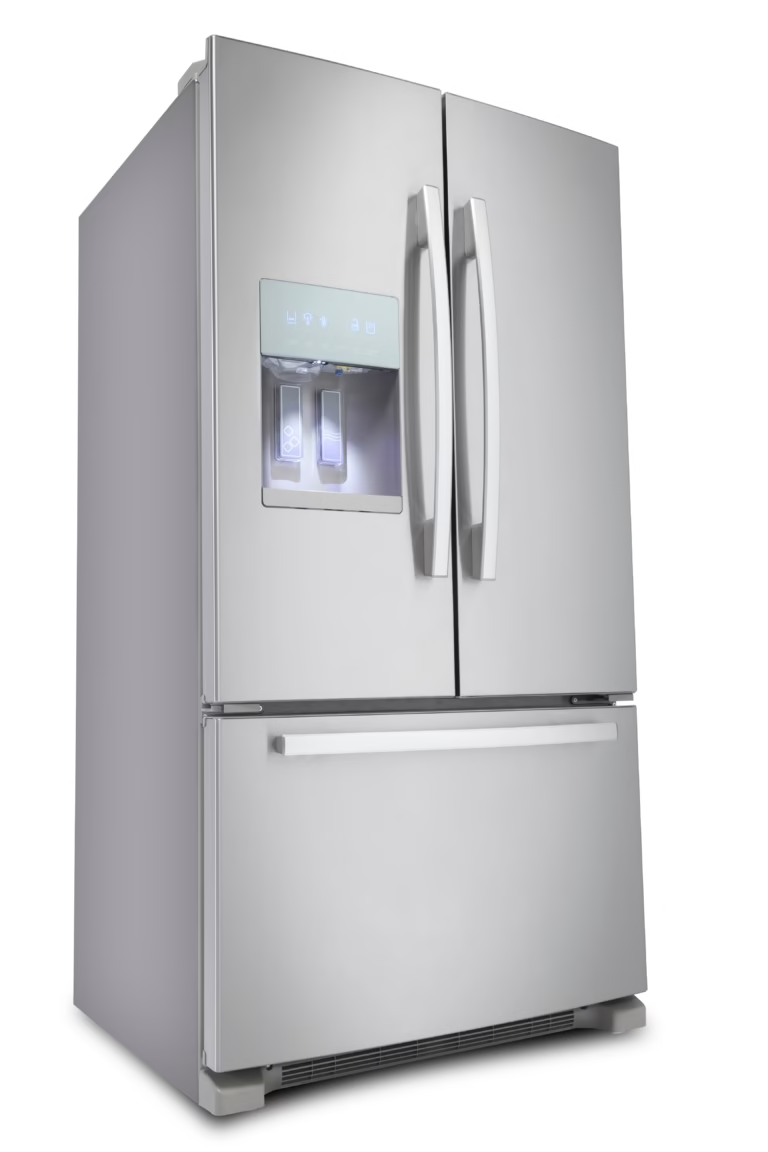
| Full-size fridge (~150W) | ~6-7 hours continuous | ~6-7 hours continuous |
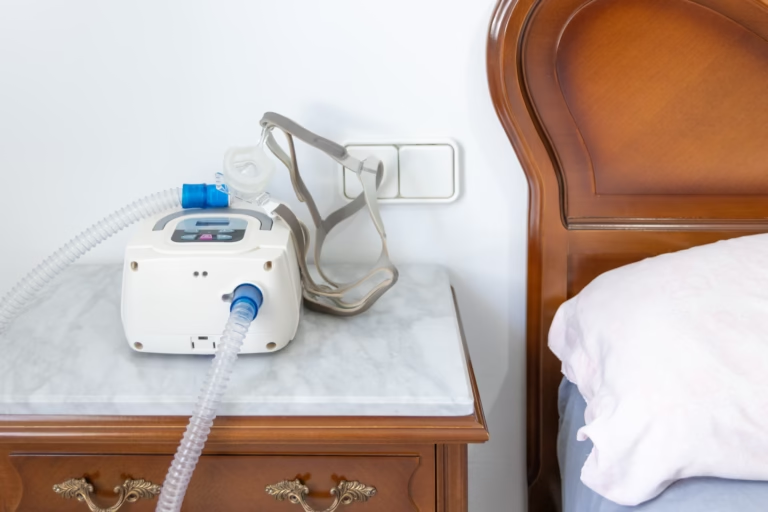
| CPAP machine (~40W) | ~24+ hours | ~24+ hours, longer with expansion battery |
| Laptop (~65W) | ~14 charges | ~14 charges |
| Space heater (~1,200W) | Runs, but drains fast (<1 hour) | Runs slightly longer with X-Boost headroom |
Runtime estimates assume a full charge and typical manufacturer-rated efficiency; actual runtime varies with ambient temperature, appliance startup draw, and battery age.
FAQ
Read next: Best Solar Generators for CPAP Users · How Much Does a Home Backup Generator Cost