Can You DIY a Standby Generator Install?
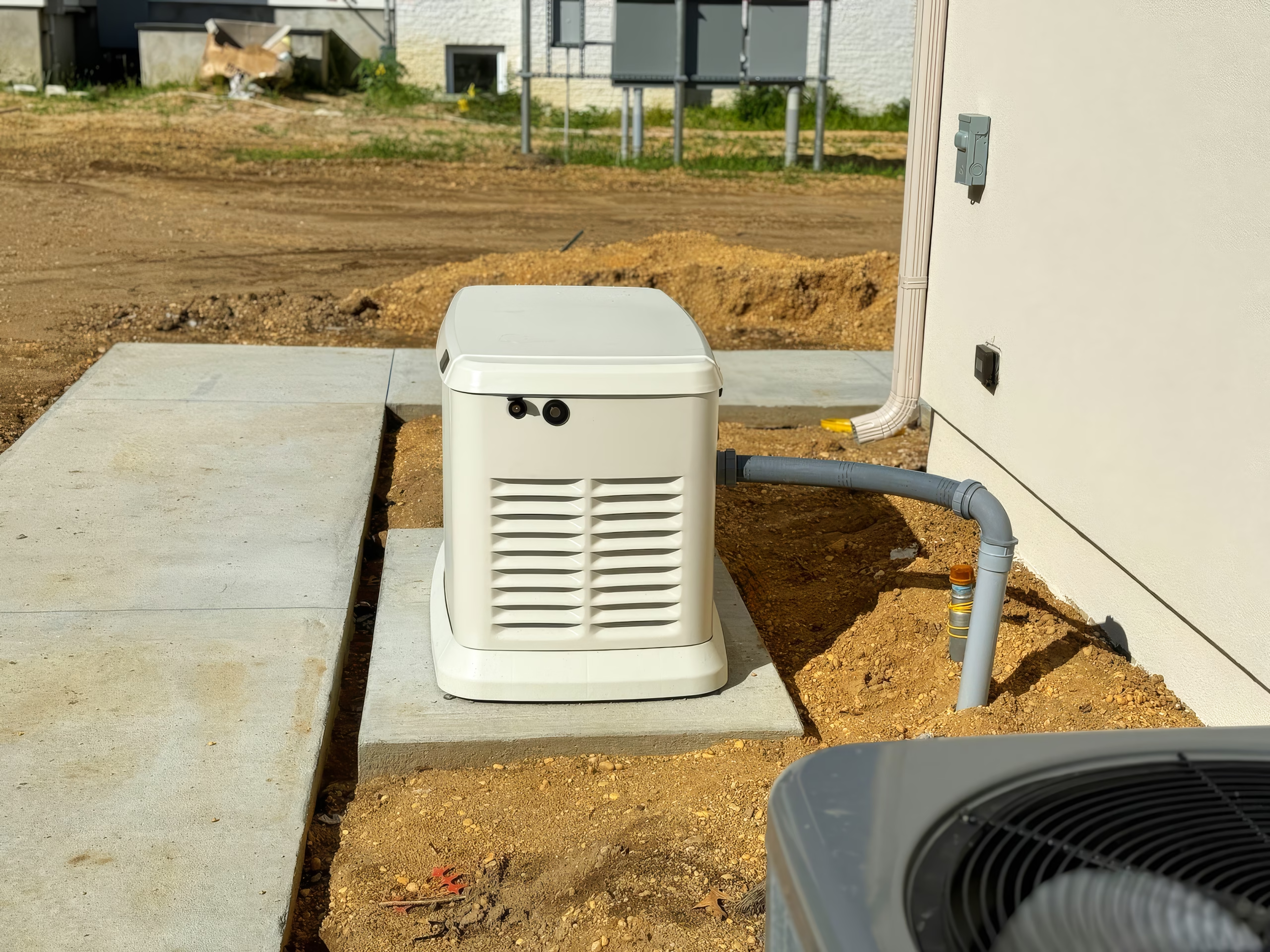
Some of the work on a whole-house standby generator is genuinely homeowner-friendly. The part that ties it into your home’s wiring almost never is — and getting it wrong can kill a utility lineworker. Here’s exactly where the line falls.
The Brofessionals is reader-supported. When you buy through links on this page we may earn a small commission at no extra cost to you. As an Amazon Associate we earn from qualifying purchases. See our full disclosure.
A Generac-style standby generator install runs $8,000–$16,000 installed, and a big chunk of that is labor: electrician, gas fitter, and permit fees. It’s tempting to shave a few thousand dollars off by doing some of it yourself. The good news is you can, legally and safely, handle several parts of the project. The part you almost certainly can’t — and shouldn’t attempt even if your jurisdiction technically allows it — is anything that connects the generator to your home’s electrical service.
The Short Answer
You can DIY the prep work: siting the unit, pouring or leveling the pad, running conduit, and pulling your own permit in some jurisdictions. You cannot safely DIY the interconnection — the wiring that ties the generator, the transfer switch, and your home’s electrical panel together. That work has to satisfy NEC Article 702 (Optional Standby Systems) and pass a utility-required inspection, and the failure mode isn’t “the generator doesn’t work.” The failure mode is backfeed: energizing the utility’s lines while a crew thinks they’re dead.
Why Backfeed Is the One You Don’t Gamble On
If a generator is connected to your home’s wiring without a transfer switch or interlock device that physically prevents utility and generator power from being on the same circuit at once, your generator can push power backward through your meter and out onto the street. Utility lines that are supposed to be dead during a repair are suddenly live. Line crews work outages assuming the grid is de-energized in their work zone; backfeed from an improperly wired generator is a well-documented way homeowners have killed or seriously injured utility workers. This is exactly why the NEC requires a listed transfer switch or interlock kit for any generator connected to a home’s wiring, and why utilities take unpermitted generator interconnections seriously.
| Task | Typically OK to DIY | Notes |
|---|---|---|
| Choosing generator size/model and siting location | Yes | Must still meet manufacturer clearance and local setback codes |
| Pouring or leveling the concrete/composite pad | Yes | Straightforward for a handy homeowner |
| Pulling the permit application | Sometimes | Many AHJs let homeowners pull their own permit for their own residence — check locally |
| Trenching for conduit or gas line routing | Often | Rough digging is commonly allowed; final connections are not |
| Running the gas line and making the fuel connection | No | Requires a licensed plumber or gas fitter in nearly every jurisdiction |
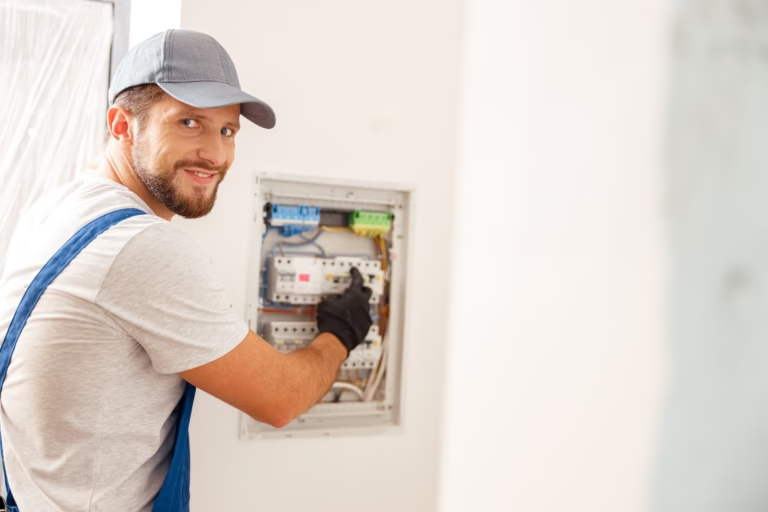
| Wiring the transfer switch and tying into the main panel | No | Requires a licensed electrician; must pass inspection under NEC 702 |
| Final utility interconnection and startup | No | Often requires utility sign-off in addition to the electrical inspector |
Permits and Inspections Aren’t Optional Paperwork
Most municipalities require an electrical permit and inspection for any generator that connects to your home’s wiring, and many also require a separate mechanical or gas permit for the fuel line. A licensed electrician typically pulls the electrical permit as part of the job. Skipping this step doesn’t just risk a fine: unpermitted electrical work can void your homeowner’s insurance claim if the generator is ever involved in a fire, and it can complicate or kill a home sale when the buyer’s inspector flags an unpermitted interconnection. Before you do anything, call your local building department or AHJ (authority having jurisdiction) and ask what they require for a standby generator installation — requirements vary meaningfully by city and utility.
What a Realistic DIY Scope Looks Like
Reasonable to DIY
- Researching and selecting the right generator size for your home’s essential loads
- Site prep: clearing, leveling, and pouring the pad per manufacturer clearance specs
- Pulling your own permit where your AHJ allows homeowner permits
- Rough trenching for conduit runs (leave splicing and terminations to the electrician)
- Ongoing maintenance after a professional install: oil changes, air filters, running the self-test cycle
Leave to Licensed Pros
- Any wiring that touches your main panel, including the transfer switch or interlock
- The gas or propane line’s final connection to the generator
- Load calculations that determine which circuits the transfer switch should cover
- The inspection and utility sign-off process
- Anything involving backfeed prevention — this is not a place to improvise
Once your system is professionally installed and inspected, a whole-house surge protector at the main panel is a cheap way to protect the investment — a generator’s own voltage swings during transfer and startup are exactly the kind of thing surge protection is built to catch.
Check Whole-House Surge Protector on Amazon →
FAQ
Related reading: How Much Does a Home Backup Generator Cost in 2026 · Interlock Kit vs Transfer Switch · Generac Install Costs in 2026: Real Quotes Itemized · Whole-House Surge Protectors: Worth It? · browse all DIY guides