Interlock Kit vs Transfer Switch: Which One Do You Need?
Both let you safely power your house’s wiring from a portable generator without running a maze of extension cords. Here’s the real difference, and which one fits your situation.
The Brofessionals is reader-supported. When you buy through links on this page we may earn a small commission at no extra cost to you. As an Amazon Associate we earn from qualifying purchases. See our full disclosure.
Running extension cords through windows during an outage works, but it’s limited and inconvenient. An interlock kit or a manual transfer switch both let a portable generator safely power circuits through your home’s existing wiring — the difference is in cost, installation complexity, and how many circuits you can run at once.
| Interlock Kit | Manual Transfer Switch | |
|---|---|---|
| What it does | A mechanical device preventing the main breaker and generator breaker from being on simultaneously | A separate sub-panel that lets you manually select which circuits draw from the generator |
| Cost (parts) | $50 – $150 | $200 – $800 (installed cost typically $1,000–$2,200 with labor) |
| Installation | Simpler, often a few hours for a licensed electrician | More involved, typically a half-day install |
| Circuit selection | Powers your whole panel through the main breaker (up to generator capacity) | Powers only the specific circuits wired into the transfer switch |
| Best for | Budget-conscious buyers who want flexibility to power any circuit as needed | Buyers who want dedicated, always-ready circuits without manual breaker switching |
How Each One Actually Works
Interlock Kit
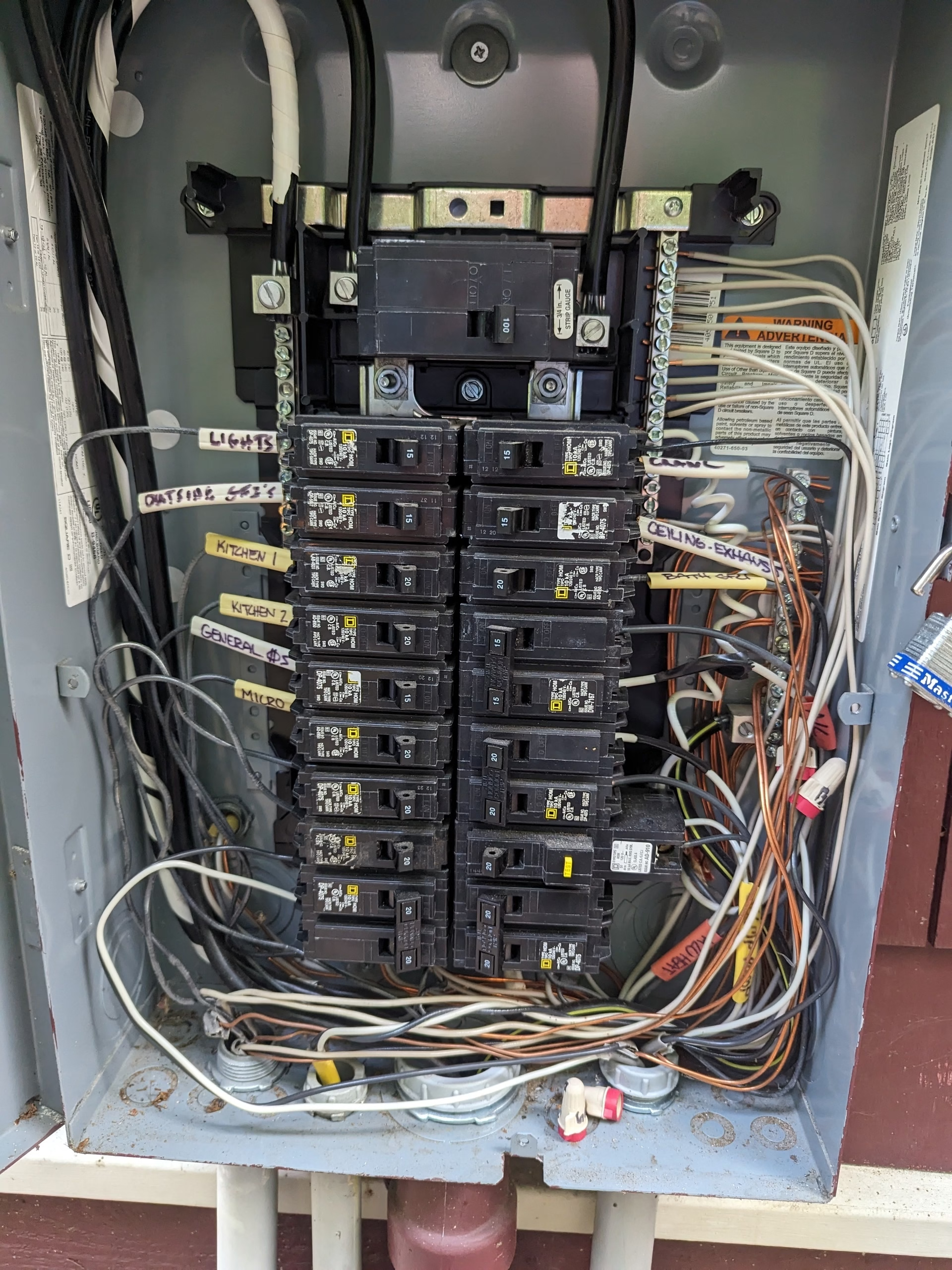
A small mechanical bracket installed on your main panel that physically prevents both the main utility breaker and a dedicated generator breaker from being switched on at the same time. During an outage, you flip off the main breaker, flip on the generator breaker, and you’re powering your whole panel (up to your generator’s capacity) through your home’s existing wiring — no rewiring of individual circuits required.
Manual Transfer Switch
A separate small sub-panel installed near your main panel, pre-wired to a chosen set of circuits (typically 6–10). During an outage, you flip a set of switches on the transfer switch panel to move those specific circuits from utility power to generator power. It’s faster to operate once installed, but only the pre-selected circuits are available.
Check Generator Interlock Kit on Amazon → Check Manual Transfer Switch Generator on Amazon →
Which One Should You Choose
Pros
- Interlock kit: lower cost and simpler install, with the flexibility to power any circuit in your panel as long as you stay under your generator's total capacity
- Interlock kit: a good fit if your power needs vary outage to outage and you'd rather choose circuits on the fly
- Transfer switch: faster and simpler to operate during an actual outage, since your key circuits are already pre-wired
- Transfer switch: better if you always want the same specific circuits (fridge, sump pump, a few lights) powered without thinking about it
Cons
- Interlock kit requires manually switching individual breakers in your main panel each time, which is more hands-on during an outage
- Transfer switch limits you to only the circuits it was wired for, even if your generator has spare capacity
- Both require professional installation; DIY installation is a serious safety and legal risk
FAQ
Read next: How Much Does a Home Backup Generator Cost in 2026 · Can You DIY a Standby Generator Install