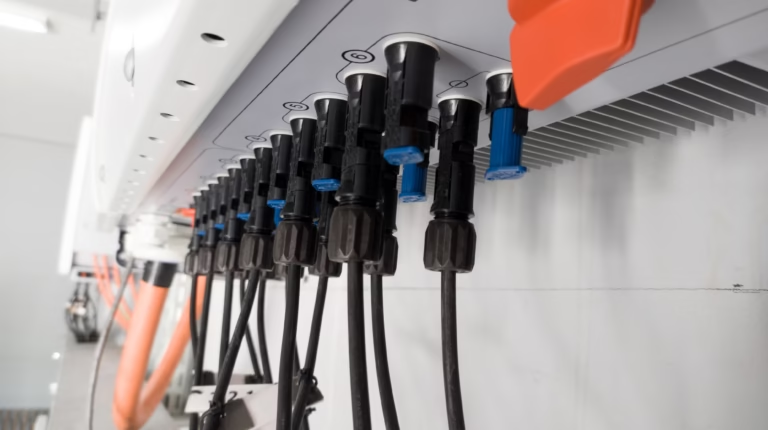
How to Build a Solar Generator at Home (DIY)
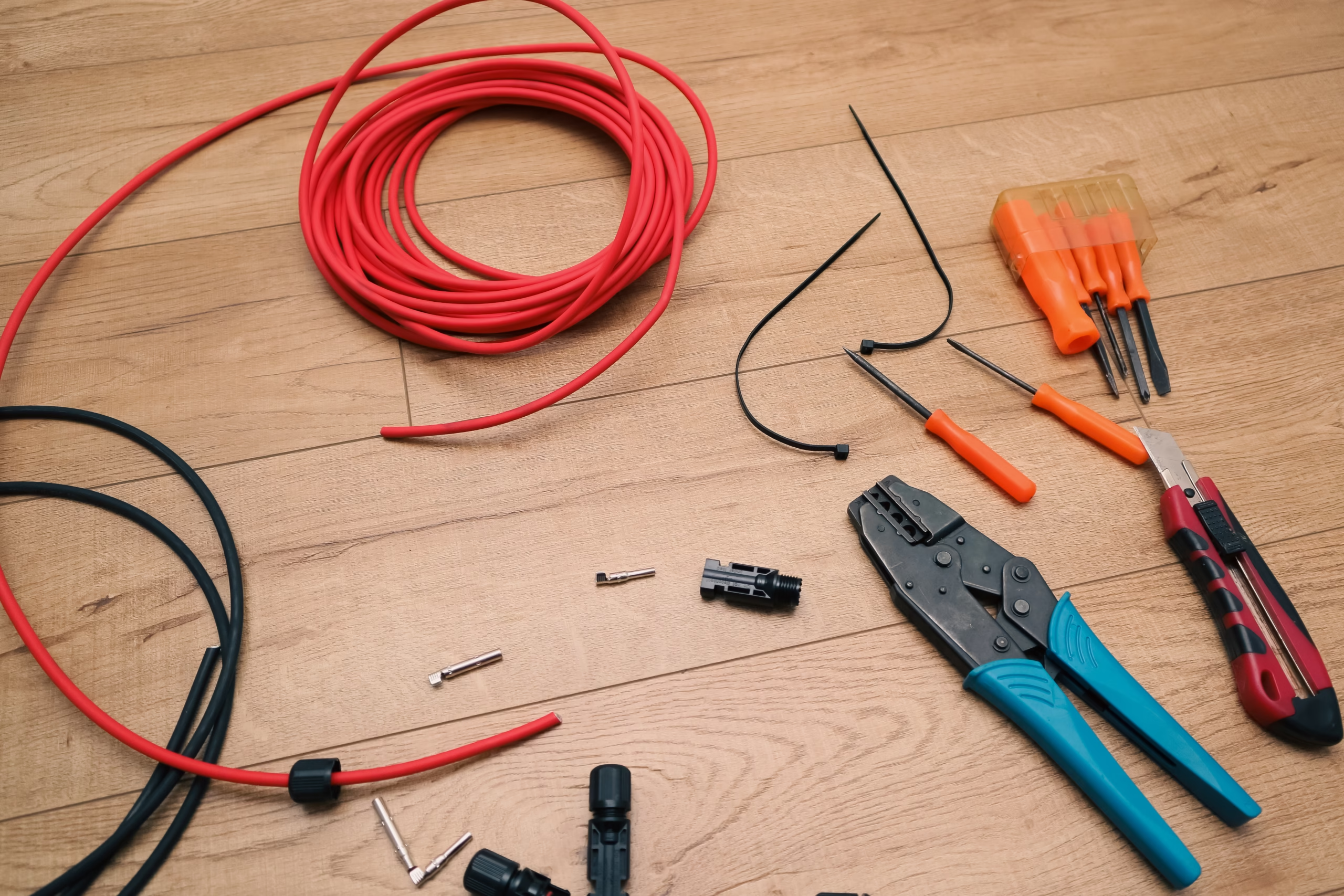
A DIY solar generator can save real money over a prebuilt power station, if you’re comfortable with basic wiring and willing to spend a weekend on it. Here’s what actually goes into building one.
The Brofessionals is reader-supported. When you buy through links on this page we may earn a small commission at no extra cost to you. As an Amazon Associate we earn from qualifying purchases. See our full disclosure.
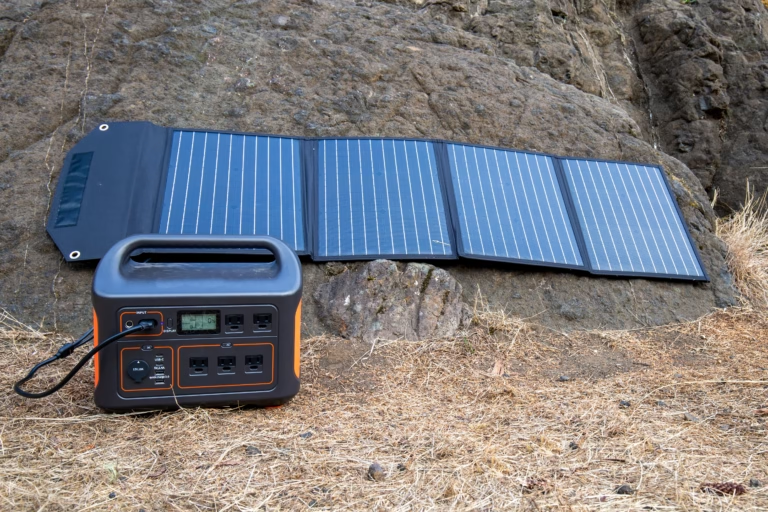
“Solar generator” is really shorthand for four separate components wired together: solar panels, a charge controller, a battery, and an inverter. Prebuilt power stations bundle all four into one sealed box for convenience. Building your own trades that convenience for lower cost per watt-hour and the ability to size (and later expand) each component independently.
| Component | Role |
|---|---|
| Solar panel(s) | Converts sunlight to DC electricity — size based on your daily charging needs |
| Charge controller (MPPT preferred) | Regulates panel output into the battery safely; MPPT is more efficient than older PWM controllers |
| Battery (deep-cycle, LFP recommended) | Stores the energy; LiFePO4 is safer and longer-lasting than lead-acid for this use |
| Inverter (pure sine wave) | Converts stored DC battery power into standard AC household power |
| Wiring, fuses, enclosure | Connects everything safely; a fused disconnect between each stage is essential |
Basic Build Steps
- Choose your battery capacity based on what you want to run and for how long (see our fridge/freezer and CPAP sizing guides for reference numbers).
- Match a charge controller’s amperage rating to your solar panel array’s total output, with headroom — undersizing the controller is a common and avoidable mistake.
- Select an inverter rated for your peak (surge) load, not just your average running load.
- Wire everything through appropriately rated fuses at each connection point — between panels and controller, controller and battery, and battery and inverter.
- House the battery, controller, and inverter in a ventilated enclosure, and test the full system at low load before relying on it.
Check MPPT Solar Charge Controller on Amazon → Check Lifepo4 Battery 100ah on Amazon → Check Pure Sine Wave Inverter on Amazon →
DIY vs. Prebuilt: The Real Tradeoff
| DIY Build | Prebuilt Power Station | |
|---|---|---|
| Cost per Wh | Typically lower, especially at larger capacities | Higher, but you’re paying for integration and safety testing |
| Setup effort | A weekend project requiring basic electrical comfort | Plug and play out of the box |
| Expandability | Fully modular — swap or add any single component | Limited to what the manufacturer supports (if anything) |
| Safety certification | On you to source certified components and wire correctly | UL/ETL-listed as a complete system in most cases |
| Warranty | Per-component, and only as strong as your weakest link | Single warranty covering the whole unit |
Pros
- Meaningfully cheaper per watt-hour once you’re building above ~1,000Wh of capacity
- Full control over every component, so you can upgrade the battery or inverter independently later
- A genuinely satisfying project for anyone who enjoys hands-on electrical work
Cons
- Safety is entirely your responsibility — incorrect fusing or wiring is a real fire risk
- No single warranty covering the whole system if something goes wrong
- Takes real time and at least basic electrical knowledge; not a true beginner project
FAQ
Read next: Best 200W Portable Solar Panels of 2026 · Balcony Solar in the US (2026): What's Legal, What Works, What to Buy