Solar vs Gas Generator: Honest Break-Even Math for 2026
A solar generator costs more up front than a comparable gas generator — but gas isn’t free to run. Here’s the real math on when solar pays for itself, and when a gas generator is still the smarter buy.
The Brofessionals is reader-supported. When you buy through links on this page we may earn a small commission at no extra cost to you. As an Amazon Associate we earn from qualifying purchases. See our full disclosure.
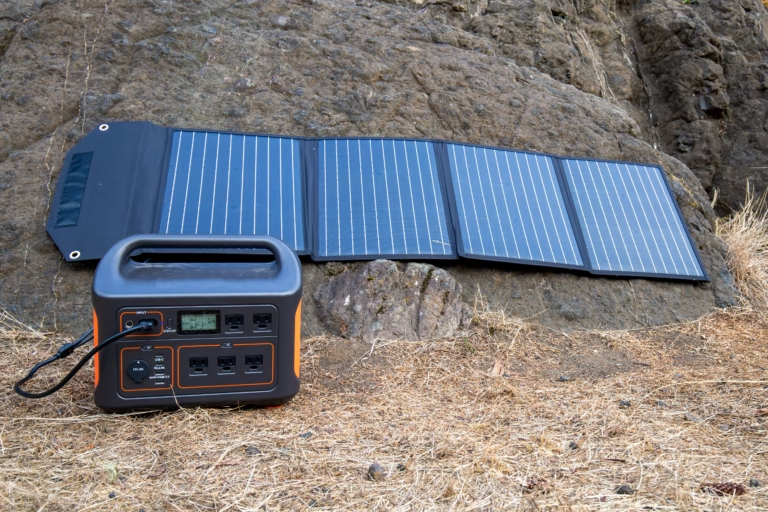
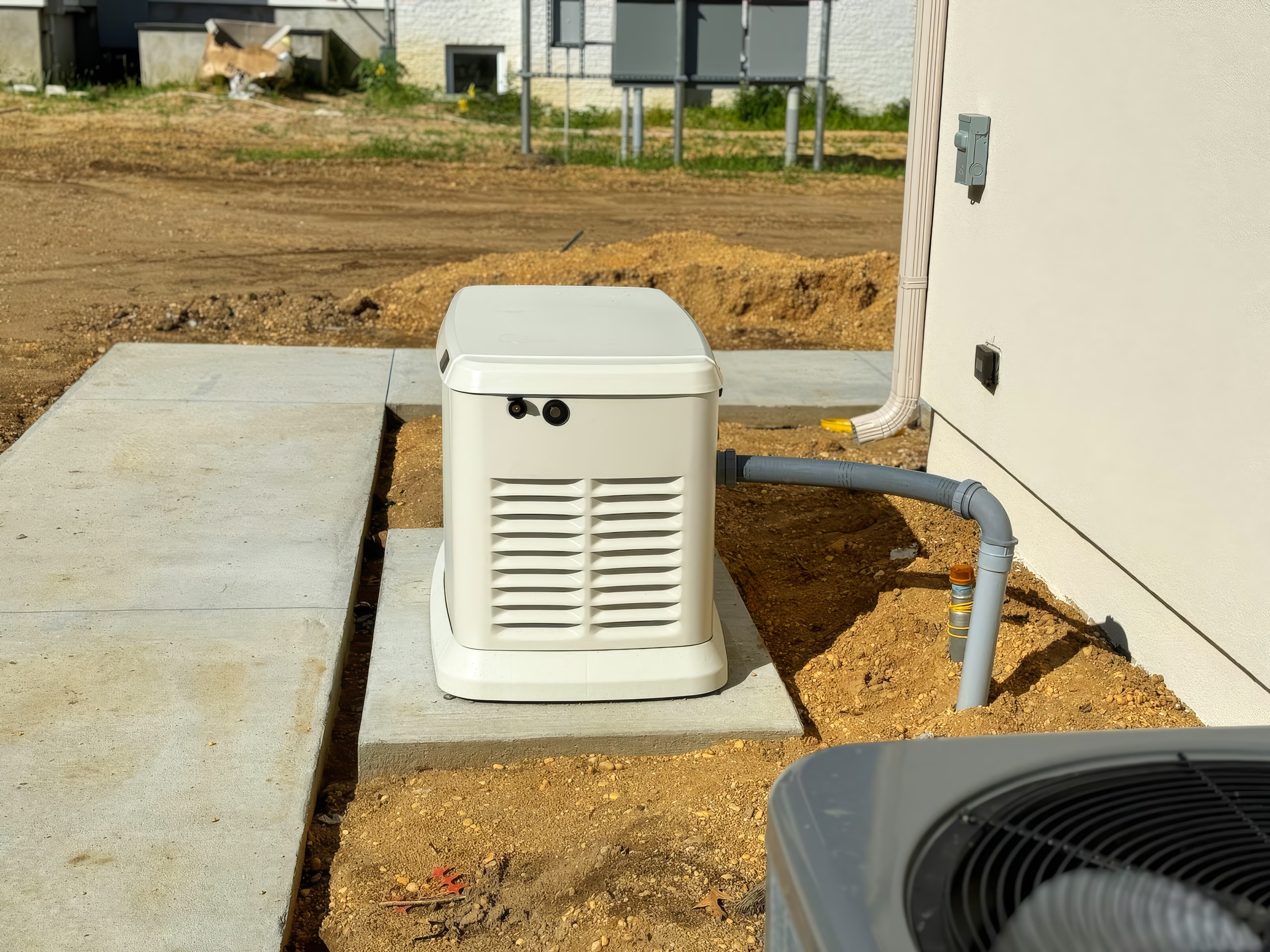
“Solar generator” is a bit of a misnomer — it’s really a battery power station that you can recharge from the sun, a wall outlet, or a car. A gas generator makes its own power on demand, as long as you keep feeding it fuel. Both can keep your fridge, some lights, and a few essentials running through an outage. The question that actually matters is cost over time, not just the sticker price — and that depends entirely on how often you expect to use it. We ran the numbers on both.
Upfront Cost
| Item | Solar Generator Setup | Gas Generator Setup |
|---|---|---|
| Core unit | ~1,000–1,200Wh LiFePO4 power station — $700–$900 | 3,500W gas inverter generator — $550–$650 |
| Recharge source | 200W portable solar panel — $250–$320 | Included (runs on gasoline) |
| Extras | Usually none needed | Extension cords, funnel, stabilizer — ~$30–$50 |
| Typical total | ~$1,050–$1,150 | ~$600–$650 |
Gas wins on day one, by roughly $450–$500. That gap is the entire reason this is a break-even question and not an obvious answer either way.
What It Costs to Actually Run Each One
A gas generator’s real cost shows up every time you use it. At a moderate load, a 3,500W inverter generator burns roughly 0.25–0.35 gallons of gasoline per hour. At $3.50/gallon, that’s about $1.00–$1.05 per hour of runtime in fuel alone — before oil changes, spark plugs, or fuel stabilizer for the gas sitting in the tank between uses. Budget roughly $50–$80 a year in routine maintenance parts if you do it yourself, more if you pay a small-engine shop.
A solar generator’s marginal cost per hour of use is close to zero — there’s no fuel to buy, and a quality LiFePO4 battery is rated for 3,000–4,000 charge cycles, which is far more than a household backup-power setup will use in a decade. The tradeoff is capacity: once the battery’s charge is gone, you’re waiting on sunlight (or a wall outlet) to refill it, whereas a gas generator just needs another jug of gas.
Solar Generator
- No fuel cost, no fumes, safe to run indoors or in a garage
- Silent operation — no engine noise
- Near-zero maintenance
- Recharges free from the sun given enough daylight
Gas Generator
- Runs as long as you have fuel — not capacity-limited
- Lower upfront cost
- Refuels in minutes, any time, any weather
- Needs regular maintenance and stored fuel goes stale
Cost Over Time: Two Real Scenarios
We modeled two usage patterns, since “how much backup power do you actually need” is the single biggest variable in this whole comparison.
Scenario A: Occasional short outages (~20 hours/year)
A handful of storms a year, a few hours each. This is the typical suburban household that loses power now and then but rarely for long.
| Year | Solar Generator (cumulative) | Gas Generator (cumulative) |
|---|---|---|
| Year 1 | $1,100 | $661 |
| Year 3 | $1,100 | $783 |
| Year 5 | $1,100 | $905 |
| Year 10 | $1,100 | $1,210 |
At light, occasional use, the gas generator stays cheaper for roughly 8 years before fuel and maintenance costs finally catch up to the solar setup’s higher upfront price. If you only lose power a few times a year for a few hours, gas is the more economical choice for a long time — the math just doesn’t favor solar at low usage.
Scenario B: Storm-prone area, frequent multi-day use (~100 hours/year)
Hurricane or ice-storm-prone regions where outages are longer and more frequent, or households that also use their backup power for camping, job sites, or as a daily convenience.
| Year | Solar Generator (cumulative) | Gas Generator (cumulative) |
|---|---|---|
| Year 1 | $1,100 | $765 |
| Year 3 | $1,100 | $1,095 |
| Year 5 | $1,100 | $1,425 |
| Year 10 | $1,100 | $2,250 |
At heavier use, the crossover point lands around year 3 — after that, every additional year of fuel and maintenance costs pushes the gas generator further past what the solar setup already cost outright. By year 10, the gas generator has cost roughly double the solar setup.
Where Each One Actually Wins
Solar generator makes more sense when
- You expect frequent or extended outages (storm-prone regions)
- You also want it for camping, job sites, or daily convenience — spreading the cost over more use
- You need to run it indoors, in a garage, or somewhere fumes and noise are a problem
- You want near-zero ongoing maintenance
Gas generator makes more sense when
- Outages are rare and short for you
- You need guaranteed runtime regardless of weather or season (no sun dependency)
- Budget today matters more than cost over 5–10 years
- You might need to power higher-draw appliances for longer stretches
The honest answer: neither option is universally “better.” A gas generator is the more capital-efficient choice for light, occasional use, and it doesn’t care whether the sun is out. A solar generator becomes the cheaper option — and the more pleasant one to live with — once you’re using backup power often enough that fuel and maintenance costs start adding up. If you want the DIY route to build your own solar power bank rather than buying a pre-built unit, see our guide to building a solar generator at home.
Check Jackery Explorer 1000 v2 Power Station on Amazon → Check 200W Foldable Solar Panel on Amazon →
Check Champion 3500W Inverter Generator on Amazon →
FAQ
Read next: How to Build a Solar Generator at Home (DIY) · Best Solar Generators for CPAP Users · More Solar Guides