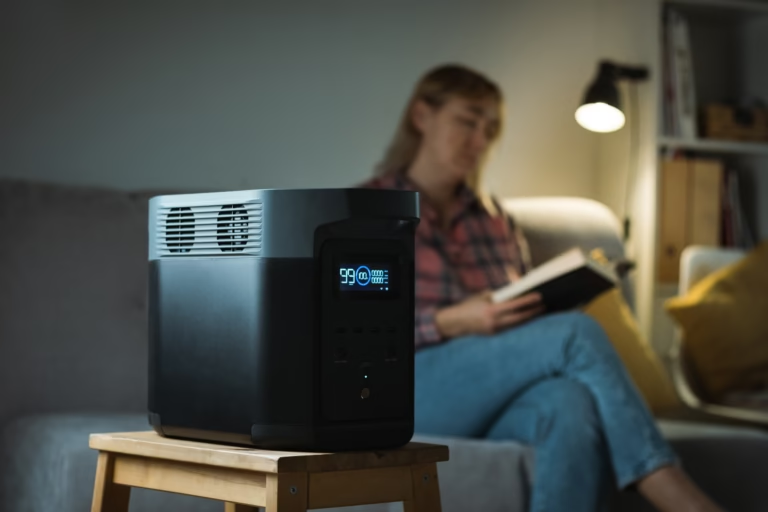
Best Power Stations for Apartment Dwellers
No garage, no gas storage, and often no balcony to run a generator on. Here’s how to pick backup power that actually works for apartment living.
The Brofessionals is reader-supported. When you buy through links on this page we may earn a small commission at no extra cost to you. As an Amazon Associate we earn from qualifying purchases. See our full disclosure.
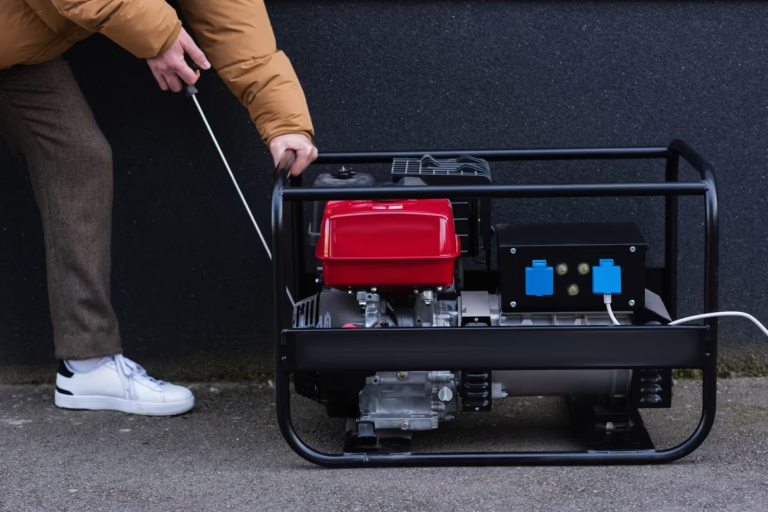
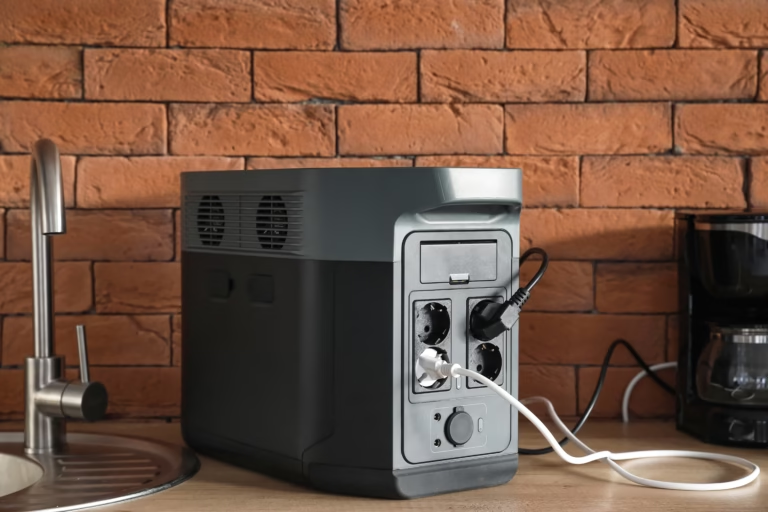
Gas generators are a non-starter in most apartments — no safe place to run one, nowhere to store fuel, and many leases explicitly prohibit them. A portable power station solves all three problems: it’s silent, completely safe indoors, and recharges from a wall outlet you already have. Here’s how to pick the right size and features for apartment life.
| Consideration | What to Look For |
|---|---|
| Storage footprint | Look for a compact form factor that fits a closet shelf or under a desk |
| Recharge method | AC wall outlet is the primary method; solar is a nice-to-have, not essential, for most apartment dwellers |
| Noise | Silent — no fan noise concerns for close quarters, unlike a generator |
| Weight | 20–35 lbs is manageable to move between rooms without a hand truck |
| Typical capacity for apartment needs | 500–1,200Wh covers most single-outage scenarios |
What You’re Actually Backing Up
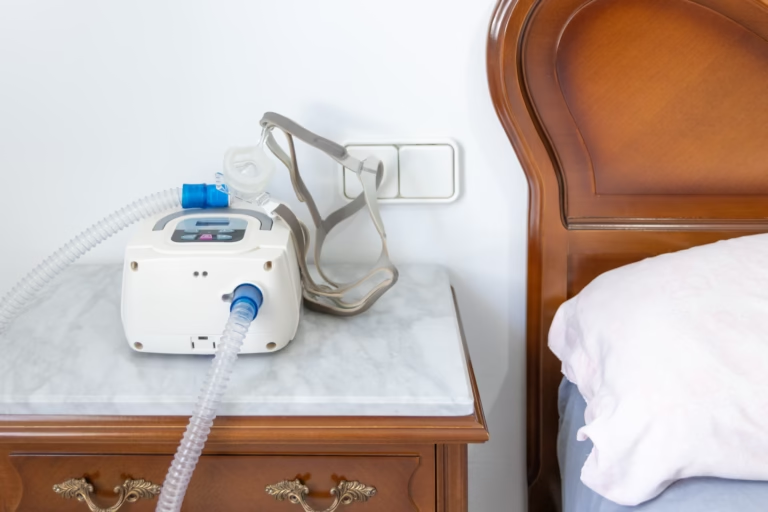
Apartment outages are usually about keeping specific things running rather than whole-home coverage: a fridge, phone and laptop charging, WiFi router, maybe a fan or small space heater, and any medical devices. That’s a very different (and much smaller) load than a house, which is why apartment dwellers are often better served by a mid-size power station than by overbuying capacity they’ll never use.
| Capacity Class | Good For | Typical Weight |
|---|---|---|
| 300–500Wh | Phone/laptop charging, WiFi router, lighting for a short outage | 10–15 lbs |
| 800–1,200Wh | Adds a fridge for several hours, small fan or space heater, medical devices | 20–30 lbs |
| 2,000Wh+ | Multi-day coverage or running larger appliances, but bulkier for apartment storage | 40+ lbs |
Check Portable Power Station Apartment on Amazon → Check 1000wh Power Station Compact on Amazon →
Apartment-Specific Pros & Cons
Pros
- Charges from a standard wall outlet, no special wiring or outdoor space needed
- Silent operation is ideal for close-quarters apartment living and shared walls
- Compact mid-size units fit in a closet or under a bed when not in use
- No fuel storage, so no fire-code or lease concerns that come with gasoline
Cons
- Limited to the capacity of the battery, unlike a generator's continuous fuel supply
- Larger units (2,000Wh+) get heavy and bulky for apartment storage and moving between rooms
- Solar recharge is impractical for most apartment balconies with limited sun exposure or space
FAQ
Read next: Portable Power Station vs Generator vs UPS · Best Solar Generators for CPAP Users