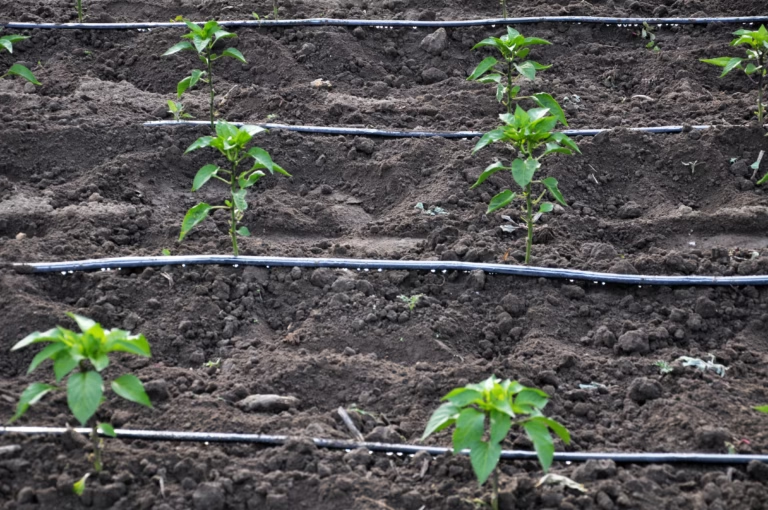
Tomato Leaves Curling? 7 Causes and How to Tell Them Apart
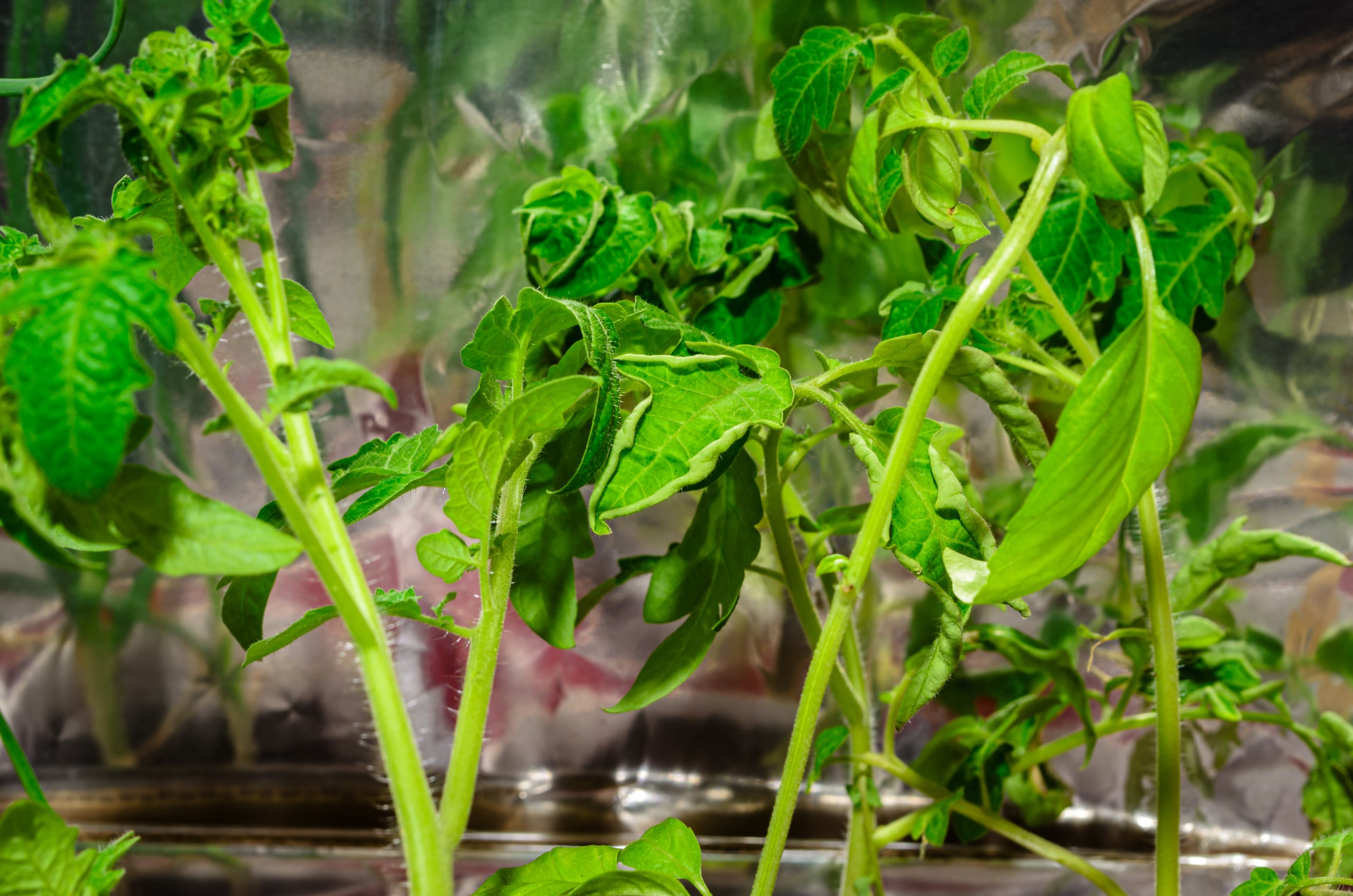
Curled tomato leaves can mean seven different things, from a hot afternoon to an incurable virus. Here’s how to tell them apart before you reach for the wrong fix.
The Brofessionals is reader-supported. When you buy through links on this page we may earn a small commission at no extra cost to you. As an Amazon Associate we earn from qualifying purchases. See our full disclosure.
Leaf curl is one of the most common questions in any tomato-growing forum, and the frustrating answer is: it depends. The same symptom (leaves cupping, rolling or twisting) shows up for reasons ranging from harmless to serious. The good news is that each cause leaves a distinct pattern once you know what to look for: which leaves curl first, which way they curl, whether the color changes, and what else is happening around the plant.
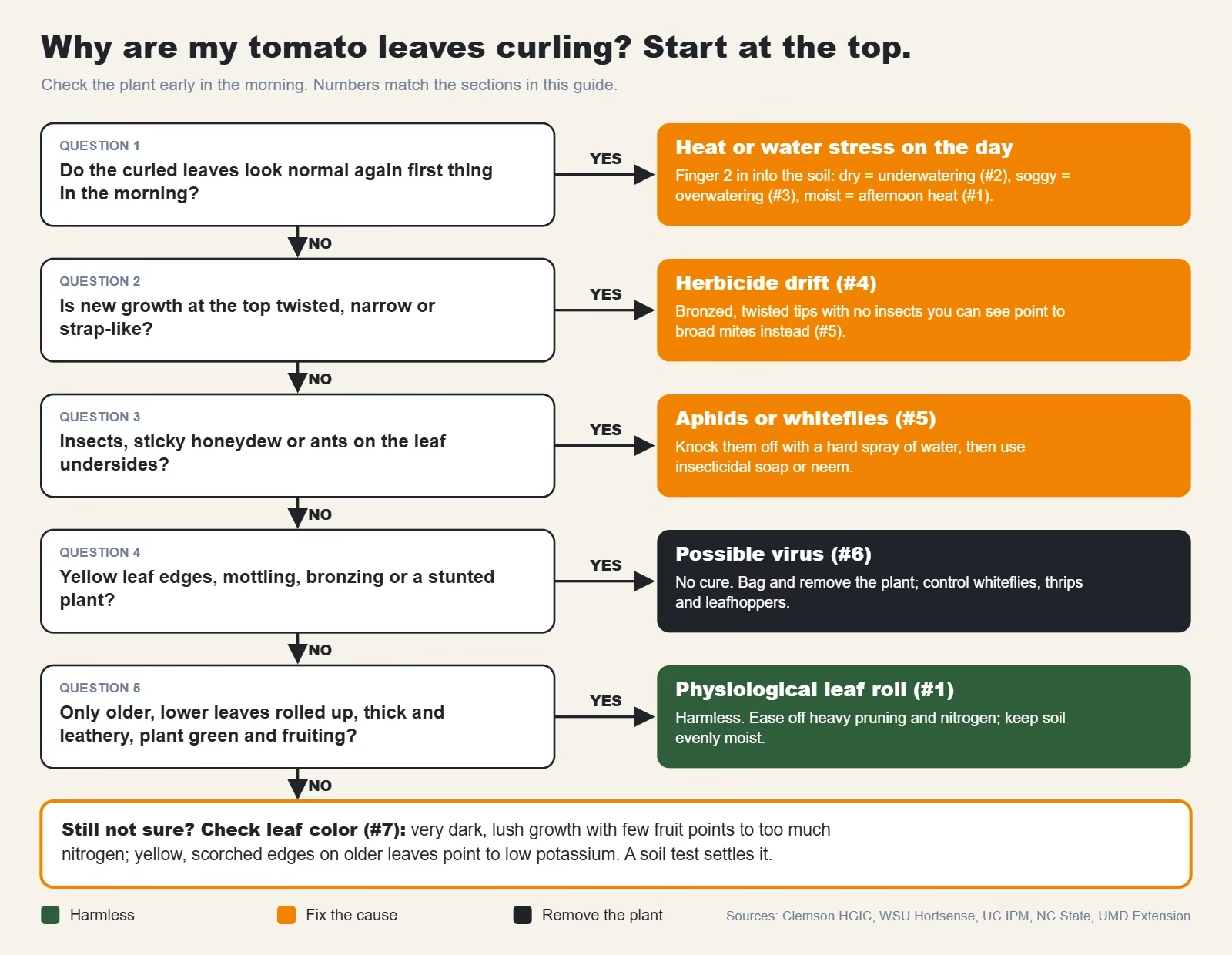
Diagnose It in Five Questions
Quick Diagnosis Table
| Symptom | Likely cause | Fix |
|---|---|---|
| Leaves droop or curl on hot afternoons and look normal again by morning | Heat stress on the day | Shade cloth during peak heat; mulch to cool the root zone |
| Older, lower leaves roll upward and inward, feel thick and leathery; plant stays green and keeps fruiting | Physiological leaf roll | Nothing urgent; ease off heavy pruning and nitrogen, keep soil evenly moist |
| Lower leaves curl, edges dry or crispy, soil dry 2 in down; curl still there in the morning | Underwatering | Deep, consistent watering; mulch to hold moisture |
| Leaves curl and feel soft or yellow, soil stays wet, possible sour smell at the base | Overwatering | Let the top 2 in dry between waterings; improve drainage |
| New growth twisted, cupped and narrow (strap-like); leaves may roll downward | Herbicide drift | Find and stop the source; plants often outgrow mild exposure |
| Tiny insects, sticky honeydew or ants under the leaves; or twisted, bronzed new growth with no insects you can see | Pests: aphids, whiteflies or broad mites | Water spray, then insecticidal soap or neem; sulfur or horticultural oil for broad mites |
| Leaves cup and yellow at the edges, mottle or bronze; plant stunted, few fruit | Viral disease | No cure: remove and bag the plant; control the insects that spread it |
| Leaves curl inward and turn very dark green, or older leaves yellow and scorch at the edges | Too much nitrogen, or low potassium | Soil test; adjust fertilizer to match |
1. Heat Stress and Physiological Leaf Roll
These two are related, and both are the least worrying causes on this list.
Heat stress on the day: during hot, dry spells, tomato leaves curl or droop in the afternoon to cut the leaf area exposed to the sun and slow water loss. If the soil is moist and the leaves look normal again the next morning, that’s all it was.
Physiological leaf roll: this is the one extension services see most. It starts on the lower, older leaves with an upward cupping of the leaflets, then an inward roll along the midrib, and the leaves turn thick and leathery while staying green. Clemson’s extension service lists heat, drought, too much water, too much nitrogen, heavy pruning, root damage and transplant shock as triggers. Rolled leaves usually stay rolled, but it has little effect on growth or yield, and fruit production carries on normally.
How to fix it: shade cloth rated at 30–40% over the plants during the hottest afternoon hours takes real pressure off, and mulch around the base keeps the root zone cooler and more evenly moist. For physiological leaf roll, go easy on pruning and high-nitrogen fertilizer.
2. Underwatering
Dry soil makes the lower leaves curl first, often with dry, slightly crispy edges. Unlike heat stress, the curl doesn’t go away overnight while the soil is still dry. Push a finger 2 inches into the soil near the plant: if it’s dry at that depth, water is the problem.
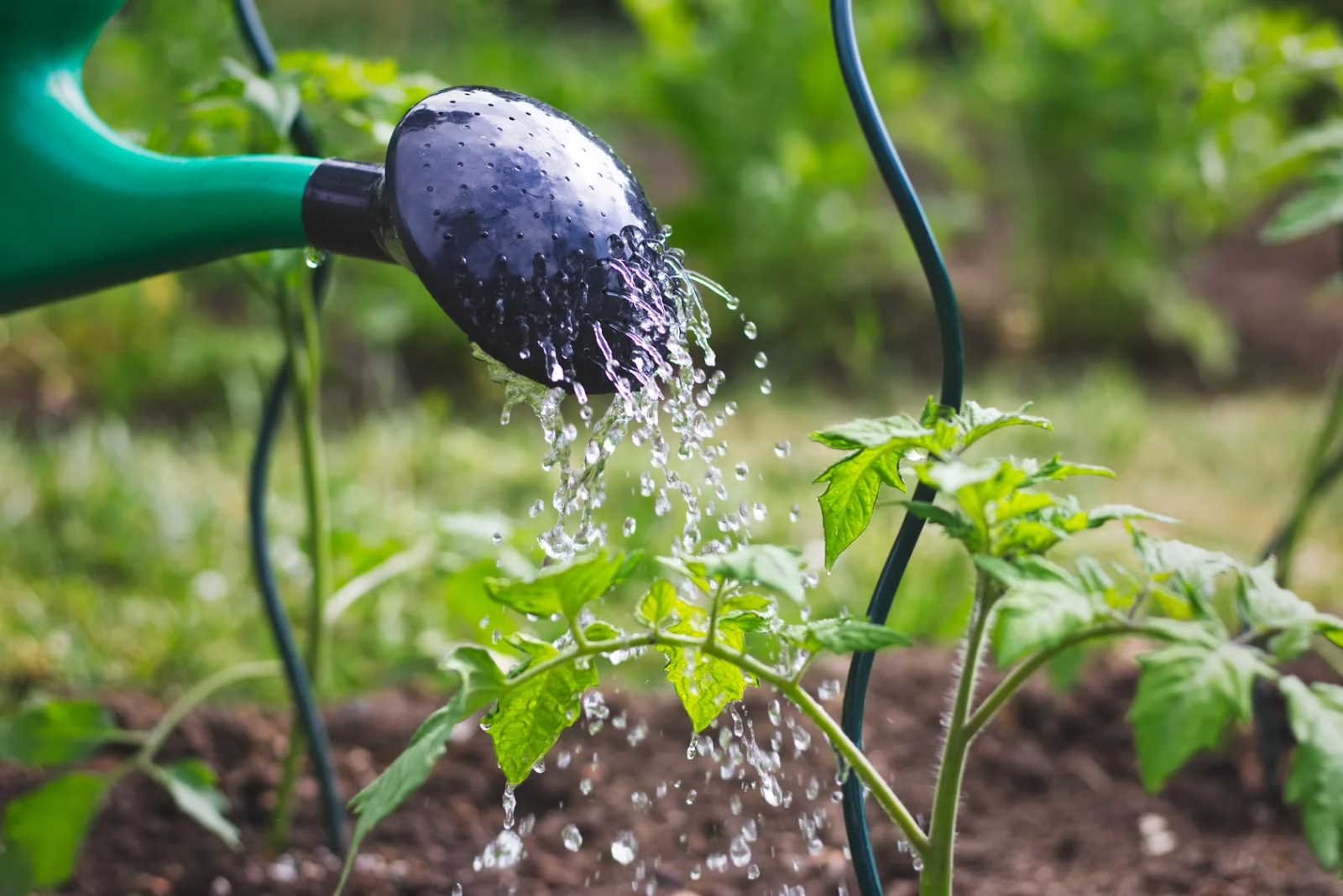
How to fix it: water deeply and consistently rather than with frequent shallow sprinkles, aiming for about 1–1.5 inches of water a week including rain. A drip irrigation kit on a timer, or a smart controller that skips rainy days, keeps it consistent without guesswork.
3. Overwatering
Too much water suffocates roots and gives a different pattern: leaves feel soft rather than crispy, may turn yellow, and the soil stays wet long after the last watering. Left unchecked, it can lead to root rot, which often has a sour smell at the base of the plant.
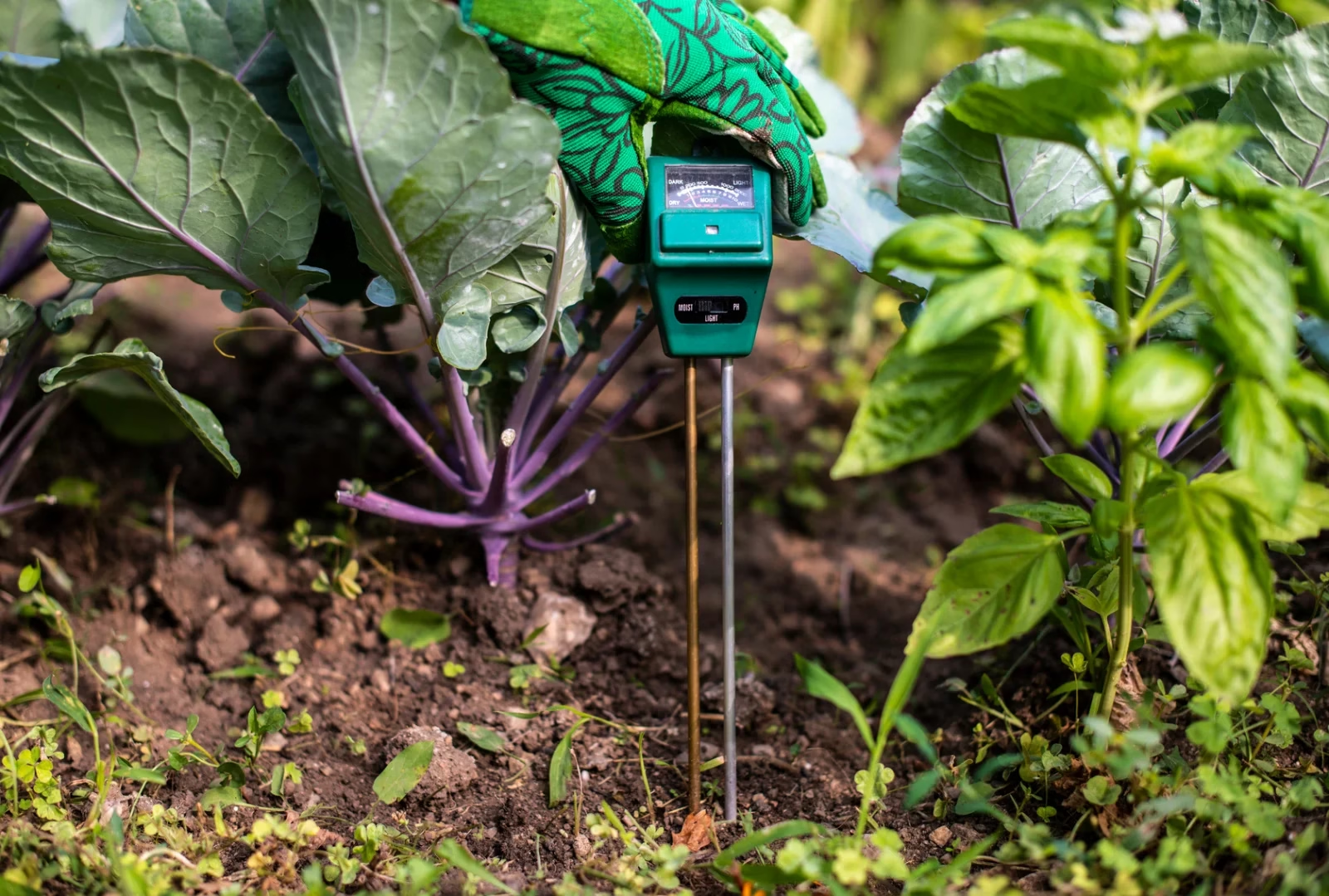
How to fix it: let the top 2 inches of soil dry out between waterings. Containers need drainage holes, and raised beds need a mix that drains; if water pools, work in compost or coarser material. Our raised bed mistakes guide covers soil mixes that hold too much water.
4. Herbicide Drift
Tomatoes are unusually sensitive to broadleaf weed killers such as 2,4-D and dicamba, found in many lawn products. They can drift in from a neighboring yard on the wind, or arrive in contaminated compost or grass clippings. The damage looks different from environmental curl: new growth comes in twisted, cupped and strap-like (unnaturally narrow), leaves may roll downward, and the whole plant looks distorted rather than just curled.
Where it comes from: the usual sources are weed-and-feed applied nearby on a windy day, grass clippings from a treated lawn used as mulch, and compost or manure from animals that ate hay treated with persistent herbicides such as clopyralid or aminopyralid, which can survive composting.
How to fix it: damaged growth won’t recover, but plants often outgrow mild exposure over several weeks once the source is found and stopped. Remove badly distorted leaves, and don’t use clippings, compost or manure from an unknown or treated source near tomatoes. If you’re buying bulk soil for new beds, ask the supplier whether it contains manure or hay compost; our guide to filling a raised bed for almost free covers safer sources.
5. Pests: Aphids, Whiteflies and Broad Mites
Aphids, whiteflies and broad mites all pierce leaf tissue and suck sap, which curls leaves where they feed, usually on the undersides and on new growth. For aphids and whiteflies, look closely (a hand lens helps) for small insects on leaf undersides, sticky residue called honeydew, black sooty mold growing on it, or ants patrolling the plant. Ants farm aphids for their honeydew, so they’re a strong clue.
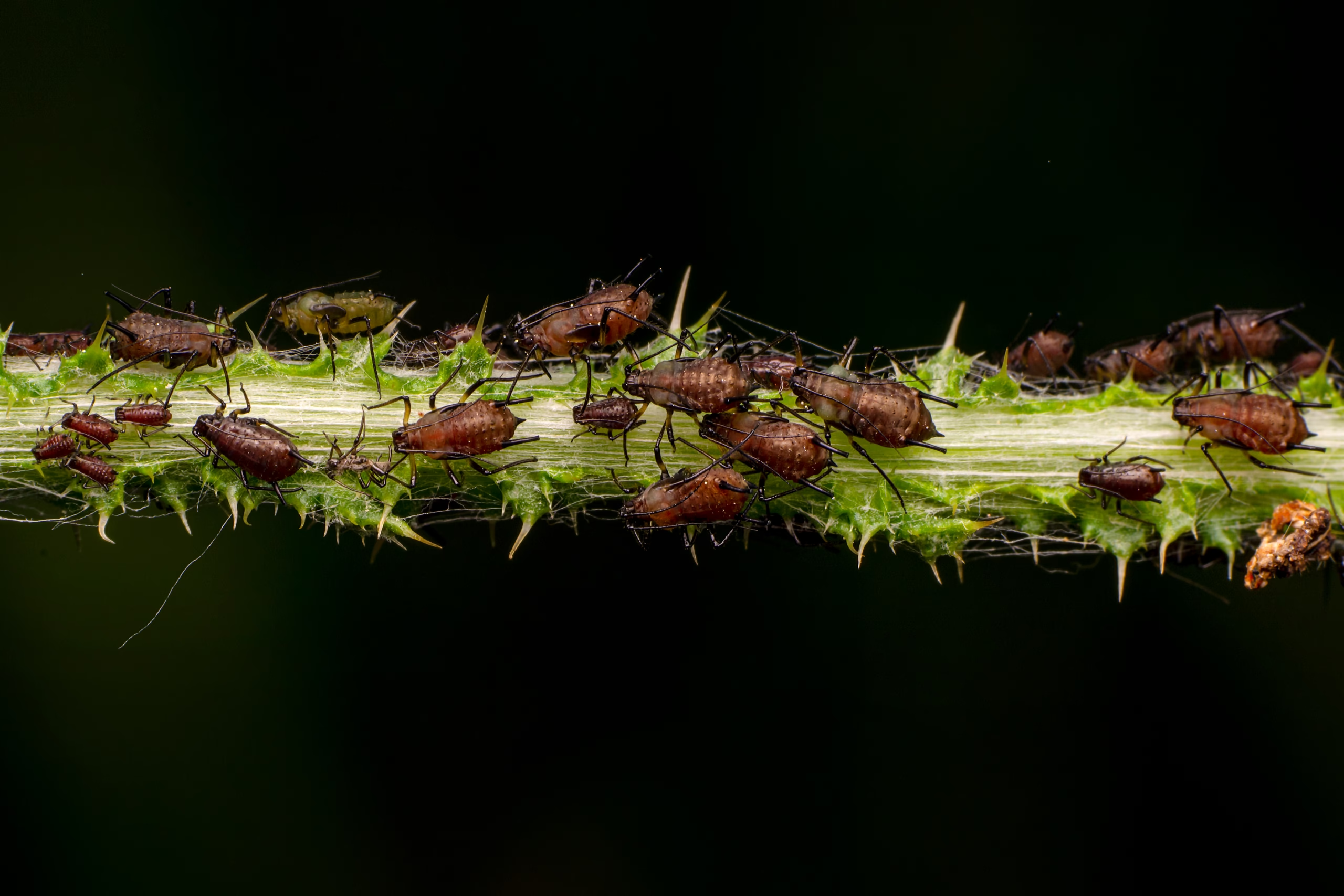
Broad mites are too small to see without magnification. Suspect them when the youngest leaves curl, twist and turn bronze while the lower leaves look fine and you can’t find any insects.
How to fix it: a hard spray of water knocks aphids off in light infestations. For heavier ones, insecticidal soap or neem oil sprayed onto the leaf undersides works on contact; both need direct coverage and repeat applications. Spray in the evening, when pollinators aren’t active and leaves won’t scorch in the sun. For broad mites, University of Maryland Extension points to sulfur or horticultural oil with thorough coverage, applied with care in hot, humid weather to avoid burning the leaves. Ladybugs and lacewings are natural aphid predators worth encouraging.
6. Viral Disease
This is the cause you’re hoping to rule out. Several viruses curl tomato leaves, and each has its own pattern:
- Tomato yellow leaf curl virus (TYLCV): spread by whiteflies. Leaves cup upward and turn yellow at the edges, and the plant is stunted with few fruit.
- Curly top: spread by the beet leafhopper, mostly in the western US. Leaves roll and twist, turn thick and brittle, and yellow, often with purplish veins; young plants may die.
- Tomato spotted wilt virus (TSWV): spread by thrips. The top leaves turn bronze with small brown spots, then curl and droop; fruit shows yellow rings.
- Tobacco and tomato mosaic viruses: mottled, distorted leaves. These spread on hands and tools rather than insects.
The hard truth: once a tomato plant has a virus, nothing cures it. If you see stunting, yellowing and mottling together, pull the plant, bag it and put it in the trash (not the compost) to protect the rest of the garden.
How to prevent it: control whiteflies, thrips and leafhoppers early, pull volunteer tomatoes and weeds that host the viruses, wash your hands and disinfect pruners between plants, and choose resistant varieties where TYLCV or TSWV is common. Yellow sticky cards hung at plant height show you when whiteflies are arriving.
7. Nutrient Problems: Too Much Nitrogen or Too Little Potassium
Nutrient imbalances can curl leaves too, and color is the tell. Too much nitrogen makes leaves curl inward and turn unusually dark, lush green, often with fewer fruit because the plant puts its energy into foliage. Low potassium works the other way: the edges of older, lower leaves yellow first, then curl and look scorched.
How to fix it: a soil test is the only reliable way to know which nutrient is off. A home kit gives a quick read on pH, nitrogen, phosphorus and potassium; your state extension office’s soil lab gives a more precise one for a small fee. If nitrogen is high, stop high-nitrogen feeding and let the plant use it up. If potassium is low, a tomato fertilizer with more potassium than nitrogen corrects it over a few feedings.
FAQ
Read next: Best Drip Irrigation Kits for Raised Beds · 7 Beginner Raised Bed Mistakes to Avoid · Best Pre-Made Raised Garden Bed Kits · Best Backyard Greenhouse Kits · all garden guides
Sources
- Clemson HGIC: tomato leaves rolling: physiological leaf roll pattern and triggers, 2,4-D injury (downward roll, twisted growth), TYLCV and mosaic
- WSU Hortsense: tomato physiological leaf roll: does not reduce yield
- WSU Hortsense: tomato curly top: rolling and twisting, thick brittle leaves, purplish veins, beet leafhopper
- UC IPM: tomato yellow leaf curl: TYLCV symptoms, whitefly spread
- NC State: tomato spotted wilt virus: bronzed top leaves, fruit ringspots, spread by thrips
- UMD Extension: broad mites on tomatoes: young leaves curl and bronze, sulfur and horticultural oil
- Oregon State: herbicide-contaminated compost: clopyralid and aminopyralid
Checked September 29, 2026. Product details change; confirm on the linked pages before you buy. What changed: added a five-question diagnosis flowchart, split heat stress from physiological leaf roll, corrected the curly top and spotted wilt descriptions, added broad mite control, added watering photos, and replaced generic Amazon searches with specific products.