Whole-House Surge Protectors: Worth It? (Especially If You Run a Generator)
A power strip surge protector guards one outlet. A whole-house surge protector guards everything wired into your panel — and if you run a portable or standby generator, it’s protecting against a risk your neighbors on pure utility power don’t have.
The Brofessionals is reader-supported. When you buy through links on this page we may earn a small commission at no extra cost to you. As an Amazon Associate we earn from qualifying purchases. See our full disclosure.
Whole-house surge protectors are cheap insurance for expensive electronics, and since 2020 the National Electrical Code (Article 230.67) has required a Type 1 or Type 2 surge protective device on all new and replaced dwelling electrical services. If your home’s service hasn’t been touched since before that, you likely don’t have one — and if you run a generator during outages, that gap matters more than it does for a purely grid-powered home.
What a Whole-House Surge Protector Actually Does
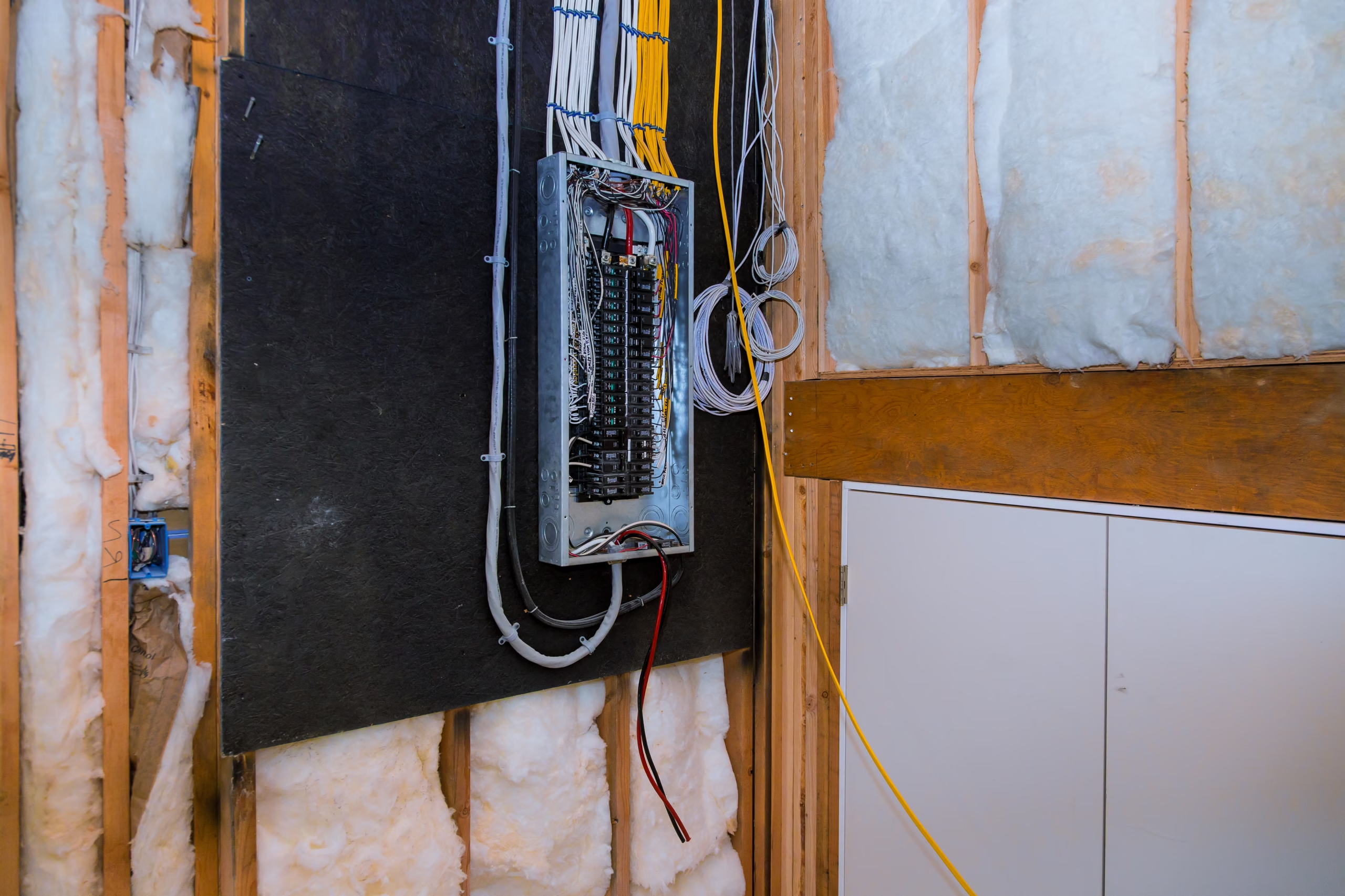
It mounts at (or near) your main electrical panel and clamps down voltage spikes before they reach the branch circuits feeding your outlets. Lightning strikes near a power line are the dramatic example, but the more common culprit is ordinary utility switching — grid equipment cycling on and off, nearby large motors starting up, or the utility restoring power after an outage. A device-level power strip surge protector only helps whatever’s plugged into it; a whole-house unit protects the HVAC system, water heater, hardwired appliances, and everything else that never runs through a power strip.
Why It Matters More If You Run a Generator
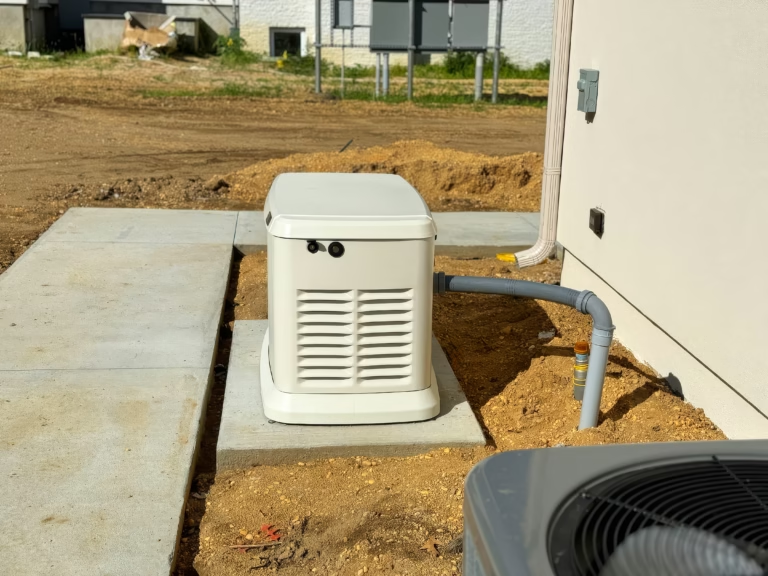
A portable generator’s output is inherently less clean than utility power — voltage and frequency can swing during startup, load changes, and shutdown, especially on cheaper or older units without inverter technology. Every time you transfer your home between utility power and generator power (and back again when the outage ends), you’re introducing exactly the kind of voltage disturbance a surge protector is built to absorb. Homes that regularly run a generator during outages are, in effect, exposed to more switching events per year than homes that never do — which is why a surge protector pairs naturally with any interlock kit, transfer switch, or standby generator setup.
Two Solid Options
| Eaton CHSPT2ULTRA | Generac 7409 | |
|---|---|---|
| Surge current rating | 108kA per phase | 50kA per phase |
| Typical price | ~$130–$150 | ~$120–$140 |
| Best for | Homeowners who want the highest surge capacity in a mainstream residential unit | Homeowners already running Generac equipment who want a matched, panel-friendly design |
| Warranty | Lifetime limited warranty with connected-equipment coverage | Standard limited warranty per Generac’s terms |
| Mounting | Breaker-slot or sub-panel mount | 1/2-inch nipple mount, NEMA 4X-rated enclosure option |
Both are legitimate picks. The Eaton has the highest surge current rating of the two and a strong connected-equipment warranty, which makes it the safer default recommendation. The Generac is worth a look specifically if you already have a Generac standby system, since it’s designed to complement that ecosystem.
Check Eaton CHSPT2ULTRA Surge Protector on Amazon → Check Generac 7409 Surge Protector on Amazon →
Cost to Install
The device itself typically runs $40–$250 depending on the model. Add electrician labor — usually a straightforward job since it lands on an open breaker slot — and most homeowners land at $200–$500 total installed. That’s inexpensive relative to a single damaged HVAC control board, water heater, or set of major appliances, which is the usual reason people end up shopping for one after a spike already caused damage.
Is It Worth It
Worth It If
- Your home’s electrical service predates the 2020 NEC requirement and has never had one added
- You run a portable or standby generator during outages
- You have modern HVAC, smart appliances, or other electronics with sensitive control boards
- You live in an area prone to lightning or frequent utility switching events
Lower Priority If
- Your home’s service was installed or upgraded after 2020, when the NEC began requiring one on new/replaced services
- You’ve already got a whole-house unit installed and in good condition (most are rated for a set number of surge events before needing replacement)
FAQ
Related reading: Interlock Kit vs Transfer Switch · Can You DIY a Standby Generator Install · How Much Does a Home Backup Generator Cost in 2026